Transaction Alert

The NLO team executed the following transaction(s):

Gold Bears Pull the Chair

bearandbullgold

Gold Stock Indicator: August 2016

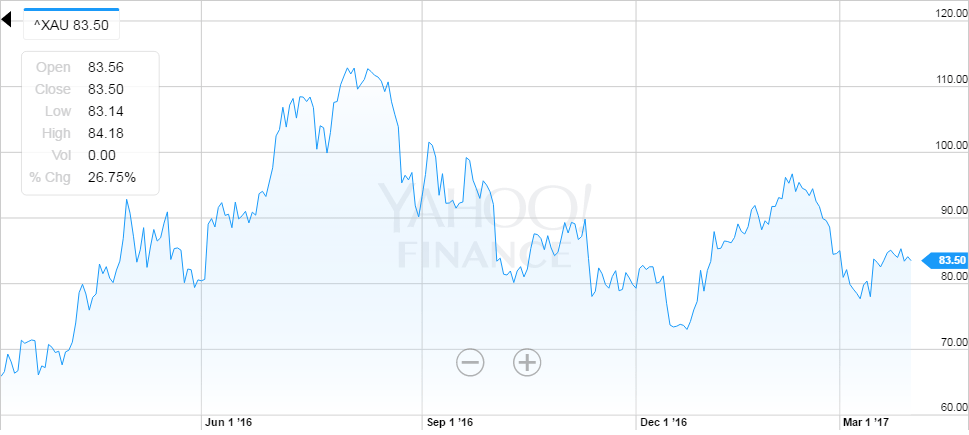
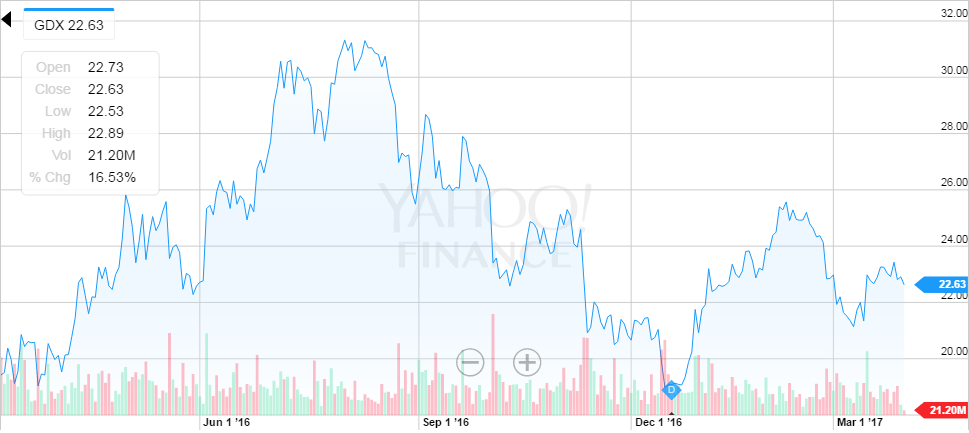
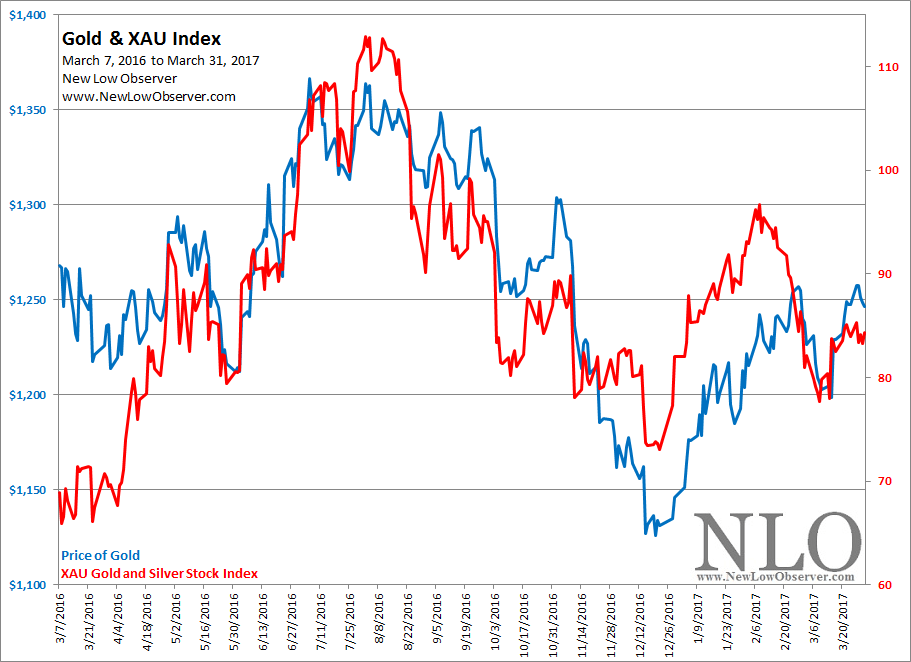
During the month of August the price of gold declined –2.28% while the Philadelphia Gold and Silver Stock Index declined –14.16%.

image

In this posting, we’ll highlight an area that we noted as a weakness in the run-up from the January 2016 low.  We’ll also put Barron’s recommendation of GoldCorp (GG) into perspective with an approach for investors to apply when trying figure out which gold stocks to consider.  Finally, as usual, we close with the performance of our current gold stock holdings.

U.S Dividend Watch List: August 26, 2016

Previous Year Performance Review

In our ongoing review of the NLO Dividend Watch List, we have taken the top five stocks on our list from August 28, 2015 and have checked the performance one year later. The top five companies on that list can be seen in the table below.

Symbol Name 2015 Price 2016 Price % change
HY Hyster-Yale Materials Handling, Inc. 61.38 52.52 -14.4%
TIF Tiffany & Co. 83.61 73.56 -12.0%
VAL Valspar Corp. 74.20 105.46 42.1%
WSBC WesBanco 30.30 32.12 6.0%
SJI South Jersey Industries 24.47 29.77 21.7%
      Average 8.7%
         
DJI Dow Jones Industrial 16,643.01 18,395.40 10.5%
SPX S&P 500 1,988.87 2,169.04 9.1%

Our average gain from the top five companies was 8.7%. The biggest gain came from Valspar (VAL) (+42%) which received a take over bid from Sherwin-Williams. The biggest decline came from Hyster-Yale Materials (HY). Although we view Hyster-Yale as a company with strong balance sheet, we expected shares to trade lower as expectation were lowered. Below is an excerpt from last year.

Statistically, the HY has decent fundamentals. The company returns 6.7% on its capital and 19% on equity invested. With total cash on hand of $99 million, $54 million in total debt, and $72 million in free cash flow, the company would likely survive the next recession with a strong balance sheet. The street is expecting profit to rise 15% but we'll suspect that a revision downward will occur in the weeks to come and possibly drive shares even lower. Because of the strong balance sheet, further analysis of this company is highly recommended.

U.S. Dividend Watch List: August 26, 2016

The S&P 500 lost 0.7% for the week but remain close to its all-time high. At the end of the week, there are 15 companies on our watch list. Continue reading

Transaction Alert

The NLO team executed the following transaction(s):

Continue reading

Our Call on the 7-Year Recovery

On August 21, 2009, we said the following:

“Based on the combination of the Dow Theory confirmation of July 23, 2009 and the IPI turning up from the June low, I will have to guess that the National Bureau of Economic Research (NBER) is going to proclaim June 2009 as the official end to the recession. The end to this recession will be lackluster and questioned from all corners.

“Additionally, the stock market will only follow the pattern of a cyclical bull market (bear market rally) within a secular (long term) bear market. I doubt that the general public will agree that the recession is over since jobs will not be as plentiful as the past.”

Below is the September 20, 2010 announcement from the National Bureau of Economic Research that the recession had officially ended in June 2009:

image

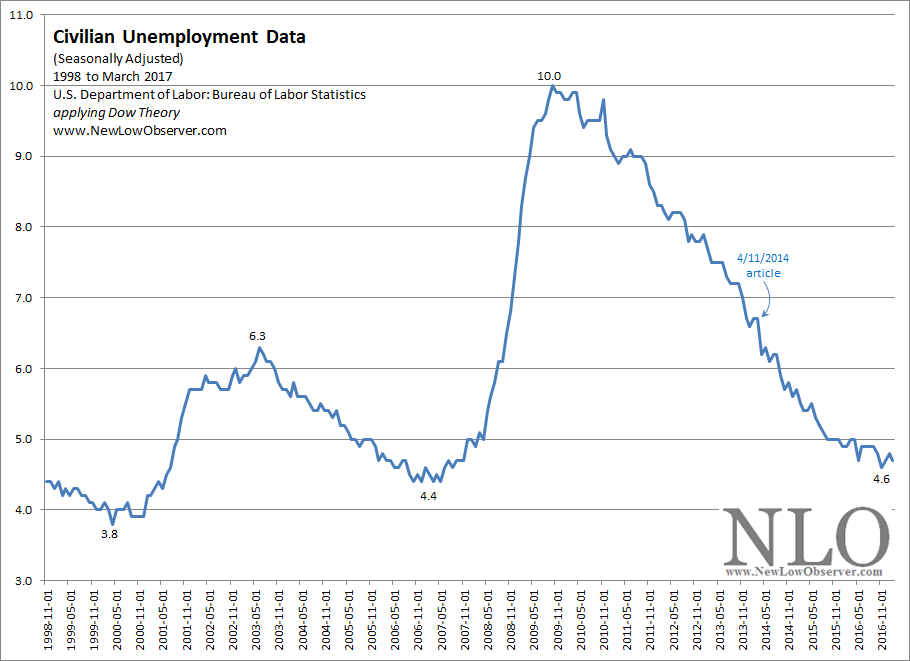
In addition, the jobs data has been lackluster as is par for the course but was anticipated in our August 2009 review.

image

Many claim that the employment data is rigged to reflect favorably for whichever politician that is in power at the time, so we have included the U-6 TOTAL unemployment data to verify if the economic environment really did turn around at or near the same period in time.

image

From all appearances, the turn in the economy did arrive at the time that we thought that it should.  There are critics who say that the U-6 TOTAL unemployment data isn’t as low as it was at the 2007 period and therefore we aren’t in a recovery.  However, to achieve a low in the U-6 TOTAL unemployment you would need the clearly obvious bubble economy that we experienced at the peak of 2007.  Anyone who wants the same U-6 TOTAL unemployment as the 2007 period also wants the subsequent bust that is required of such a period.

We haven’t had as much luck calling a top in the economy as we had in calling the bottom.  On two occasions we had Dow Theory bear market indications which turned out to be false and in one instance, we’ve had the Industrial Production Index in decline.  However, we haven’t had both occur at the same time allowing us to make the call that the economy was entering a recession.

What are the odds that such a coincidence (saying that the recession was over a year before the NBER, that no one would believe it, that unemployment would be lackluster and that a bull market was in effect) could occur?  Got lucky is all we can say.

Canadian Dividend Watch List: August 2016

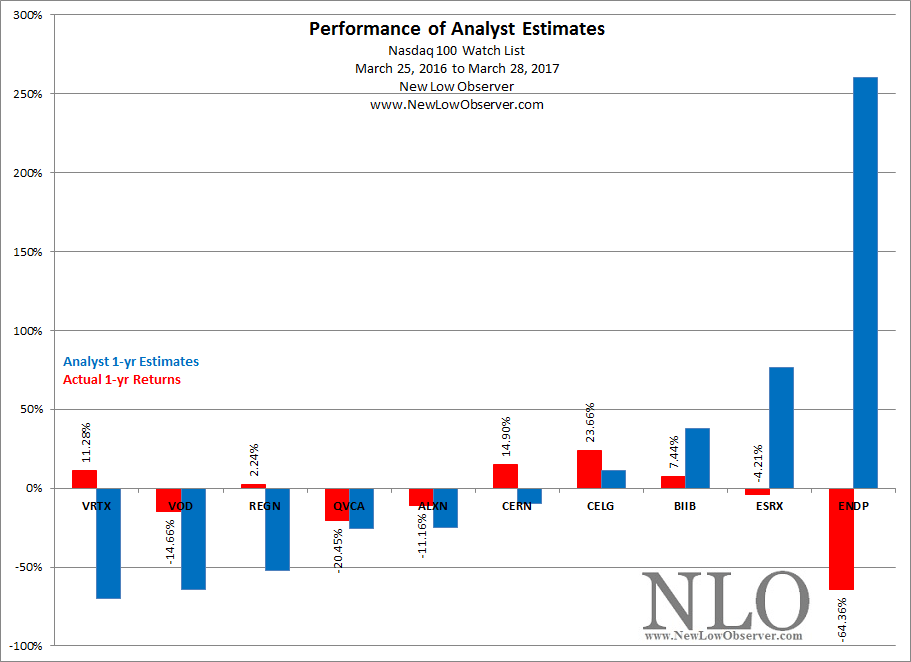
The chart below breaks down the performance of the stocks from the Canadian Dividend Watch List from August 2015.  We’ve decided to take a different tack than in the past by showing the performance of the watch list based on the analyst estimates that projected stocks that would increase in value in the following year (darlings), decrease in value (bums), the 2015 watchlist and the Toronto Stock Exchange (TSE).

image

As we said of the bums last year, “stocks that are considered to decline in price should be examined first and eliminated based fundamental and technical factors.  Stocks slated to gain the most should be considered high risk.”  All stock are not created equal, however, stocks that have lower expectations by analysts should be considered first for their investment merit.  The darlings underperformed the Toronto Stock Exchange while the entire August 2015 watchlist exceeded the performance of the TSE by an average of +1.50%.

The Nature of Market Booms and Busts

In a recent article on SeekingAlpha.com titled “The Bigger The Boom, The Bigger The Bust” by William Koldus, it was suggested that:

  • “…we have already forgotten the lessons that should have been learned in 2008.”
  • “Monetary policy makers have set the course for the next ‘Minsky Moment.’"
  • “A good dose of volatility in both the stock and bond markets would be good for all financial market participants.”

In our review of Koldus’ work, we’ll attempt to demonstrate that analysis on stock market history should not begin with evidence that is narrowly defined. Our introduction of secular trends in the market might help put current market moves into perspective.  We’ll also show that the Federal Reserve might not be as powerful as some might think.  Finally, we hope to demonstrate that a moving market, either up or down, is good regardless of the extent and timing.

Continue reading

U.S. Dividend Watch List: August 5, 2015

It was another strong week for the market and the continued to make new all-time high. The average was up 0.43% for the week and the Dow gained 0.6%. At the end of the week, there are 10 companies on our watch list. Continue reading

Transaction Alert

The NLO team executed the following transaction(s):

Continue reading

Gold Stock Indicator: End of July 2016

In the month of July 2016, gold increased +1.60% and gold stocks increased +12.94%.

image

Coppock Curve: July 2016

Since the Coppock Curve flashed a buy signal at the end of March, the Dow Jones Industrial Average has risen by +4.20% while the S&P 500 gained +5.50%. While not foolproof, the indicator has been a useful tool for strategic asset allocation.

Continue reading

Dow Theory: Quality v. Quantity

Intro

There is some need to explain how and why we have chosen to do an assessment of Manuel Blay’s work on Dow Theory published on SeekingAlpha.com. Below is a brief summary of how we went from never commenting about Manuel Blay’s work to “suddenly” bringing to light data that questions his work.

How It All Began

On January 7, 2013, Manuel Blay wrote an article titled “Dow Theory Special Issue: Assessing The Current Primary Bull Market Signal”.  In that article, Mr. Blay gave a breakdown of a recent call for a “primary trend bull market signal” according to the dictates of Dow Theory.  In summary, Mr. Blay said the following:

“As with any timing device, the Dow Theory ‘detects’ the existence of a new bull or bear market with some lag. No timing system is able in ‘real time’ to spot the emergence of a new trend. However, as I have previously written in this Dow Theory blog, the Dow Theory does a good job at signaling new bull and bear markets in a timely fashion. As I wrote in my post ‘Revisiting the 1987 crash’, which you can find here, ‘the Dow Theory tends to do a remarkable job at getting investors out of investments on a timely manner’. By the same token, the Dow Theory also excels at signaling new bull markets close enough to the bottom.”

In the comment section of the same January 7, 2013 article, we left a response that addressed several issues on the Dow Theory analysis provided by Mr. Blay. We highlighted the following problems:

  • the failure of short duration of primary trend changes
  • conflicting calls of when signals were given
  • Jack Schannep’s performance using short duration Dow Theory analysis

Mr. Blay’s response was a detailed article titled “Dow Theory Special Issue: An Answer To The New Low Observer (NLO)” dated January 12, 2013.  From that point in time, we could not offer an acceptable rebuttal without appropriate data to support our initial claim that such frequent short-term changes in the primary trend require additional study as it is not consistent with Dow Theory and should result in negative performance results.

The Collection of Data and Findings

This brings us to our analysis  in a July 13, 2016 article titled “Dow Theory, This is Not” which took data from January 24, 2013 to the present.  We felt it was only fair to take all market calls from the date that we questioned the “style” and duration of Dow Theory primary trend calls and examined the actual results based on the work of Manuel Blay.

The following is a reposting of the assessment of Mr. Blay’s work (in chronological order) from January 7, 2013 to the present.  The font that is in green or bold is a profitable transaction and the red or unbolded font is an unprofitable transaction, if a transaction were entered into based on the published date of the change in the Dow Theory Primary Trend. 

  1. Bear Market: –31.54% for GDX
  2. Bear Market: –26.08% for SIL
  3. Bull Market: –24.91% for GDX
  4. Bull Market: –26.95% for SIL
  5. Bull Market: –5.24% for HAO
  6. Bear Market: +7.46% for DJT
  7. Bear Market : +6.21% for DIA
  8. Bear Market: +7.00 for SPY
  9. Bull Market:  -9% for GDX
  10. Bull Market: –23% for SIL
  11. Bull Market: –11.30% for GLD
  12. Bull Market: –16.01% for SLV
  13. Bear Market: +8% for DIA
  14. Bear Market: +7% for SPY
  15. Bear Market: +8% for DJT
  16. Bear Market: +4% for  HAO
  17. Bull Market: +2% for  DIA
  18. Bull Market: –9% for GLD
  19. Bull Market: –11% for SLV
  20. Bear Market: +17% for GLD
  21. Bear Market:+10% for SLV
  22. Bear Market: +2.60% for DIA
  23. Bear Market: +52% for GDX
  24. Bear Market: +58% for SIL
  25. Bull Market: –4.39% for DIA

 Our Conclusion

Thus far, the data (source citations found at end of  July 13, 2016) matched our January 2013 thesis that short duration primary trend calls based on Dow Theory would result in greater than necessary negative performance results.  Not only has there been overwhelming negative results from the Dow Theory analysis the frequency of the transactions alone result in unnecessary transaction costs that add to the negative performance.

It could be said that our assessment is selective, whereby we have chosen to ignore calls made prior to January 2013. However, we only used data from the date that we questioned the work. Another criticism is that the exact date of the change in the “primary trend” did not occur at the exact date of the published work or commentary. We stand corrected on the performance numbers if the published start and published end dates are incorrect.  It could be said that we have an axe to grind with Mr. Blay.  We don’t.

Our Hope

So what is our point? Why bother someone else about their work on a topic that is a theory, at best?  Isn’t it possible to be wrong and still enjoy the process?  Isn’t is a low blow to tarnish the hard work of another? 

The point, as we see it, is to advance the topic of Dow Theory.  As we’ve said in the past, Dow Theory is often right about the market it is only the interpretation that is incorrect.  We are not excluded from this dilemma as we have been wrong on many occasions in the past.  However, when there is a clear learning opportunity, why should we stand on formality when the data is staring us in the face?  At least, that is how we see it.

Dow’s Theory on Voting and Weighing

In the short run the market is a voting machine, In the long run it is a weighing machine

"Whether the market goes up or down a few points in any one month does not alter the fact that if extraordinary increases in earnings radically changes the value of a certain stock, the price of that stock will perhaps slowly but with certainty adjust itself to its new value (Dow, Charles H. Wall Street Journal. Review and Outlook. October 25, 1900)."

U.S Dividend Watch List: July 22, 2016

Previous Year Performance Review

In our ongoing review of the NLO Dividend Watch List, we have taken the top five stocks on our list from July 24, 2015 and have checked the performance one year later. The top five companies on that list can be seen in the table below.

Symbol Name 2015 Price 2016 Price % change
INTC Intel Corp. 28.06 34.66 23.5%
LECO Lincoln Electric Holdings Inc. 57.72 61.55 6.6%
ANDE The Andersons, Inc. 35.32 36.70 3.9%
EMR Emerson Electric 50.68 55.81 10.1%
ARG Airgas Inc 98.88 142.95 44.6%
      Average 17.8%
         
DJI Dow Jones Industrial 17,568.53 18,570.85 5.7%
SPX S&P 500 2,079.65 2,175.03 4.6%

The average gain of the top five companies was exceptional. Average price gained 17.8% with Airgas (ARG) leading the way with 44.6%. Air Liquide announced an acquisition of Air Gas in mid November. We didn't elaborate more on Airgas and in many ways, we wished we did. However, we did touched upon Intel (INTC) and Lincoln Electric (LECO). Below are excerpt from prior year list.

If we look at the current fundamental figure, Intel (INTC) fell to $28 and has dividend of 3.4% which the company has no problem sustaining. Multiple of 12 appears to be low but one should expect the analysts to revise their projection down and bring 2016 EPS estimate down. We guess that F P/E would sit at 15 by the end of next year. As such, shares accumulation at current level is very enticing but with expectation that another 15-20% downside risk is highly likely and a second or third purchase will be needed.

The company (Lincoln Electric) has relatively high profit margin at 10%, return of equity of nearly 20%. Lincoln has $290M in cash, total debt of $170M, and leverage free cash flow of $375M. Based on this information, it's fair to say that the company has strong balance sheet and one shouldn't worry about the debt payment. Dividend payment of $1.16 equate to 2% yield and 30% payout ensure that dividend payout will remain certain. Back in late 2014, the company increase its payout by 26%. While that level of increase will not be likely in the year to come, we speculate that a double growth in dividend would still be likely. Income investor willing to build position now, may want to start researching the story of Lincoln and get comfortable with its tie to China.

We hope that our ongoing review of our prior work serve to benefit us and our readers.

U.S. Dividend Watch List: July 22, 2016

It was another good week for the bull as equity continued to progress higher. The S&P reached another all-time high and ended the week up 0.6%. As our name suggested, we are not one to recommend adding new capital when equity is at the high. The mantra of "buy high and sell higher" does not fit our risk profile so be advice when putting new capital to work at this level. Below are 7 companies appearing on our dividend watch list. Continue reading