This is a performance update to the posting done on December 13, 2017 titled “Dogs of the TSX 60” assuming the stocks listed were bought on December 29, 2017. That post also included the top three stocks for the respective categories on December 29, 2017 in the comment section.
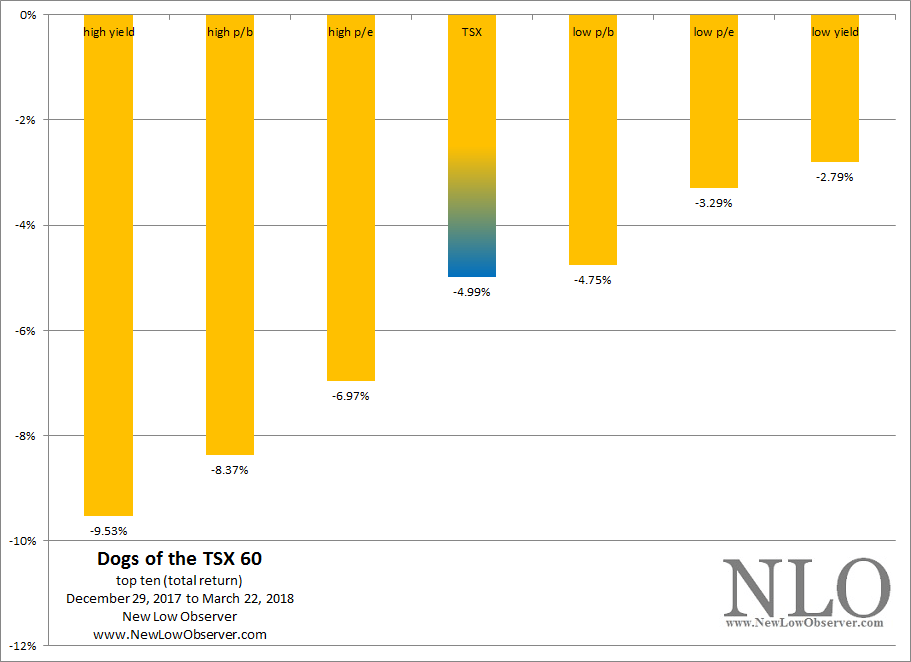
The first performance review is based on the top ten stocks in the respective categories and compared to the Toronto Stock Exchange.

This shows that in spite of the popularity of the concept, “selecting the ten highest yielding stocks and holding for a year…,” the performance of the dogs (highest yielding) has been subpar since December 29, 2017. The categories that have beat the TSX are low price-to-book, low price-to-earnings, and low dividend yield. This has been consistent since we started running these numbers. As we said in our review of the July 7, 2016 Canadian Business article titled “Blue chips at a bargain? Meet the 10 ‘Dogs of the TSX’” :
“Note that all of the low categories performed better while all the high categories performed the worst. This has been borne out in the few Canadian Dividend Watch List performance reviews that we’ve done so far.”
In our February 2018 Canadian Dividend Watch List we said the following:
“If the goal is the beat the performance of the Toronto Stock Exchange then we believe that the consideration of the ‘low yield’ category might be worth considering.”
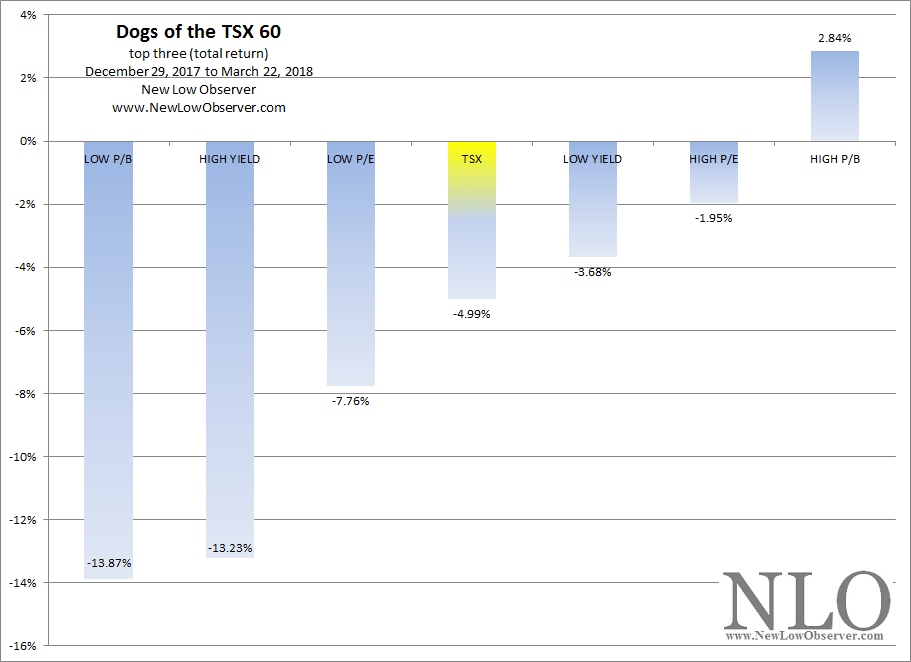
When we look at the top three Canadian Dogs of the TSX 60 from December 29, 2017 to March 22, 2018 (on a total return basis), we find the following performance.

Low yield managed to beat the TSX, however, both of the other “low” categories underperformed the TSX. High p/e and high p/b out-performed the TSX. However, as we mentioned in the February 2018 posting, we’d opt for the low yield stocks to out-perform the TSX over the remaining year. Again, high yield (dogs of the TSX 60) managed to linger as the worst performing on a consistent basis.