Below are the valuation targets for Telus Corp. (T.TO) for the next 10 years. Continue reading
- Japan
- Market Indicator
- Price Momentum Indicators
- Richard Russell
- Silver
- Speed Resistance Lines
- U.S. Dividend Watch List

Below are the valuation targets for Telus Corp. (T.TO) for the next 10 years. Continue reading
According to Yahoo!Finance, “FreeSeas Inc. (FREEF), a drybulk shipping company, engages in the transportation of drybulk cargoes. The company was formerly known as Adventure Holdings S.A. and changed its name to FreeSeas Inc. in April 2005.”
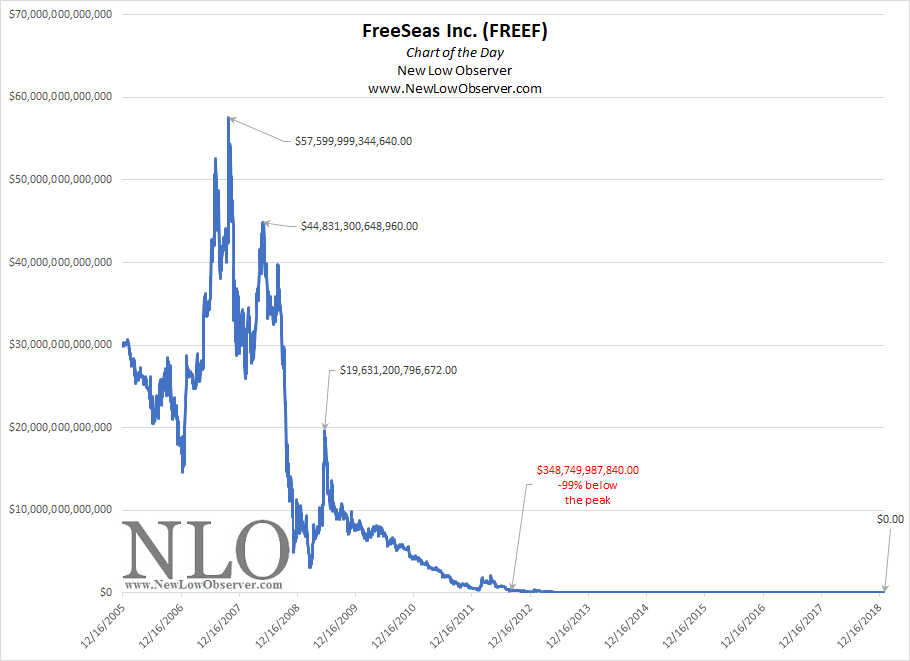
The Study of Failure
“But such a direct link between mistakes and learning is the exception rather than the rule. How is learning to take place if organisations and individuals involved in IT developments are more concerned with covering their tracks than learning from their mistakes? ("Computer: One huge crash - A report on the infamous collapse of London Ambulance's computerised dispatch system details every mistake in the book." Guardian [London, England], 28 Apr. 1994, p. 21. Infotrac Newsstand. Accessed 18 Dec. 2018.).”
Posted in Chart of the Day, FREEF, The Study of Failure
Below are the valuation targets for Gluskin Sheff (GS.TO) for the next 10 years. Continue reading
Posted in 10-year Targets, Altimeter, GS.TO
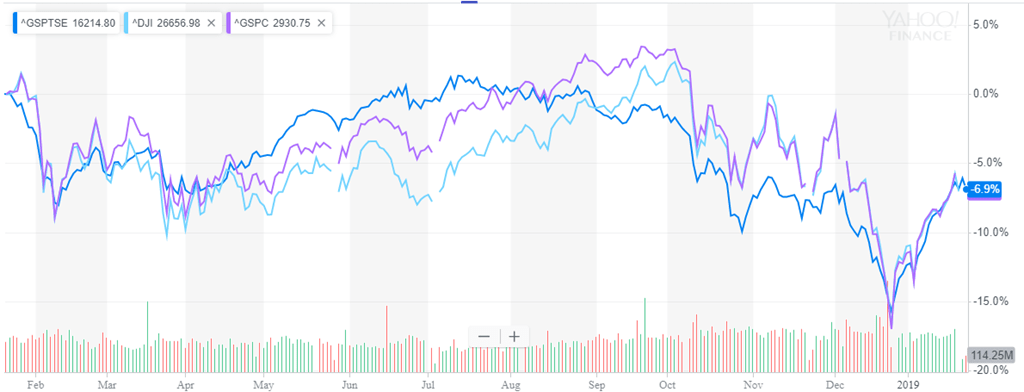
In the last year, the Toronto Stock Exchange has declined and increased in line with the U.S. markets, as compared to the Dow Jones Industrial Average and the S&P 500.
From the December 24, 2018 lows, the Toronto Stock Exchange has the following upside resistance targets.
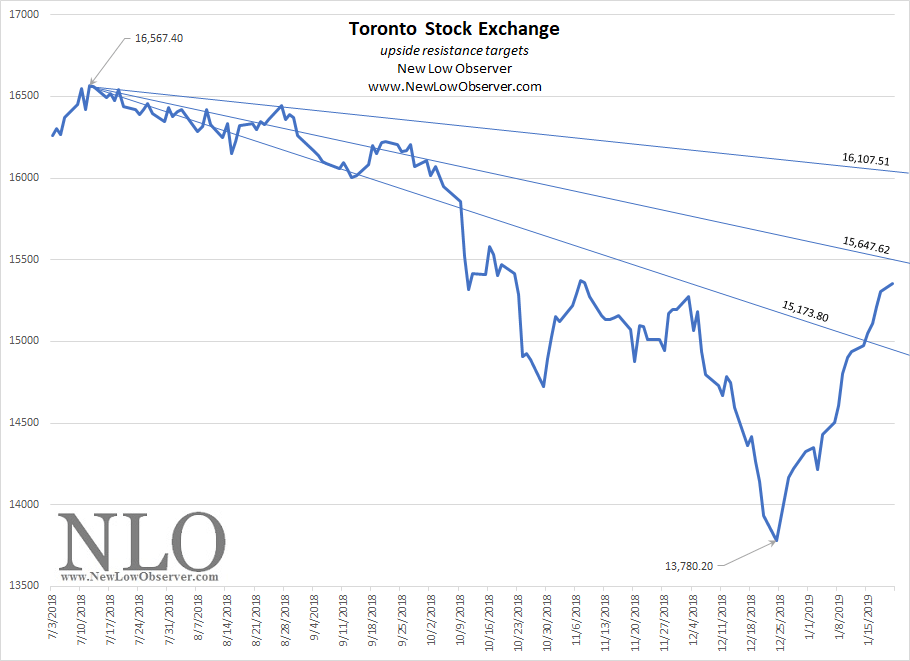
If the trend is up then we should see a retest and support at the 13,780.20 lows. If the trend is down then we should see a retest and failure of the 16,567.40 highs. For now, the Toronto Stock Exchange is expected to achieved the 15,647.62 level. Continue reading
According to Yahoo!Finance, “NewLead Holdings Ltd. (NEWLF) operates as a vertically integrated shipping company worldwide. The company was formerly known as Aries Maritime Transport Limited and changed its name to NewLead Holdings Ltd. in December 2009.”
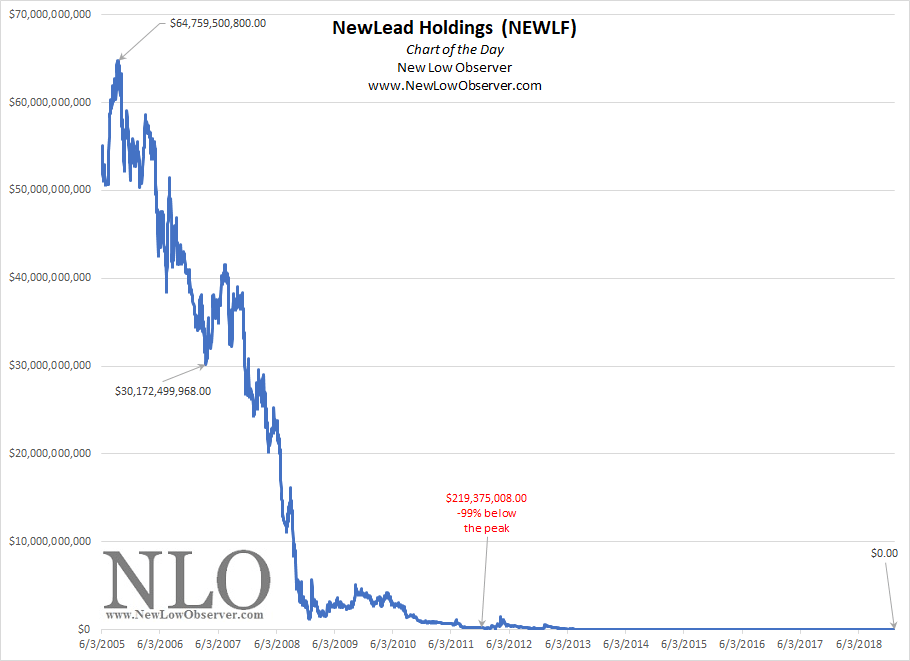
The Study of Failure
“It also said Baxter's failure to meaningfully reduce financial leverage to compensate for the increased risk of its business could also lead to a rating downgrade. ("Baxter to cut 4,500 jobs." UPI Archive: Financial, 16 Nov. 1993. Infotrac Newsstand. Accessed 17 Dec. 2018.).”
Posted in Chart of the Day, NEWLF, The Study of Failure
For those who are long the market, it was a great week as the market rose +1.30%. We believe this is a bear market rally that has taken the market back above the 50% retracement level. The next crucial level to look for is 2,800. As always, we suggest utilizing our dividend watch list as a starting point in the search for quality companies. Continue reading
Posted in Dividend Achiever Watch List, Dividend Achievers, Dividend Watch List
Tagged members
Below are the valuation targets for Flowers Foods (FLO) for the next 10 years.
Below are the valuation targets for Donaldson Co. (DCI) for the next 10 years.
According to Yahoo!Finance, “AgEagle Aerial Systems, Inc. (UAVS) designs, develops, produces, distributes, and supports unmanned aerial vehicles for the precision agriculture industry. Its products include the AgEagle RX 60 and RX 40 Systems for day-to-day image acquisition for precision agriculture growers and agronomists. The company is headquartered in Neodesha, Kansas.”
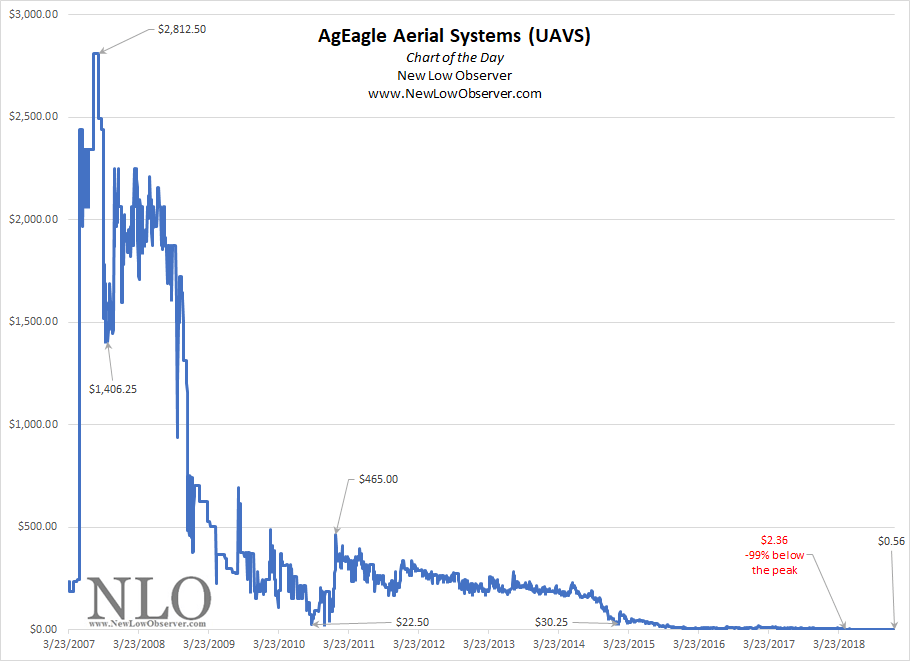
The Study of Failure
"Says the president of one midsize production company: ‘His hubris was almost endearing. He came in and said, 'Nobody can adapt my books better than I can, I've got to be the real producer of the film, and the bidding starts at a million dollars.’’ (Harmetz, Aljean. "A Writer Who Says Getting His Own Way Is the Way to Success." New York Times, 1 Apr. 1991. Infotrac Newsstand. Accessed 17 Dec. 2018.).”
Posted in Chart of the Day, The Study of Failure, UAVS
According to Yahoo!Finance, “Key Energy Services (KEG), Inc. operates as an onshore rig-based well servicing contractor in the United States.”
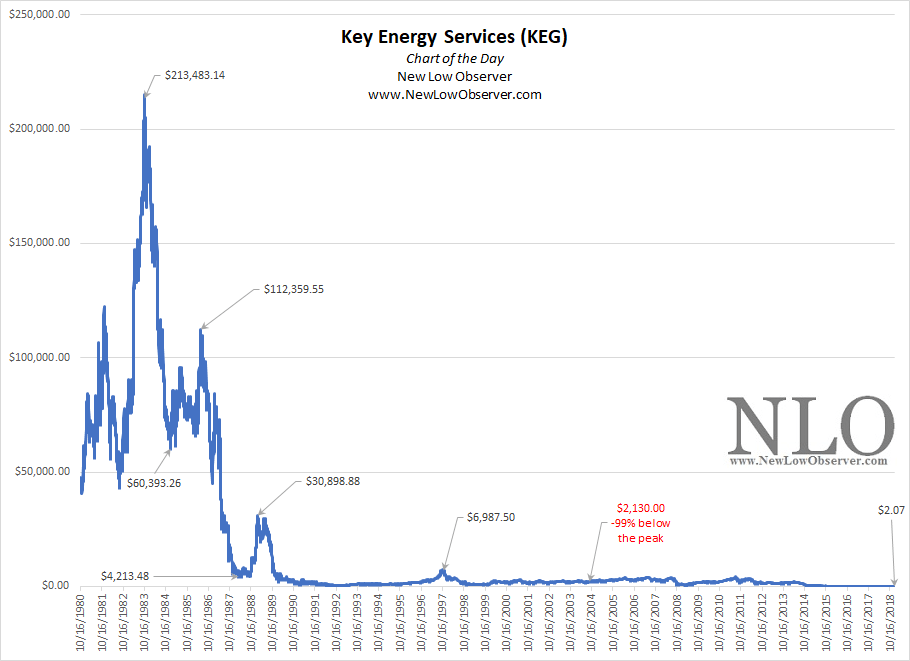
The Study of Failure
“But Hollywood has taught him some lessons. When he moved from Washington to Los Angeles before "The War of the Roses," he formed his own production company, rented offices and hired a staff. "When I started in Washington, I just put out a shingle," he says of the Adler Group, which publishes real estate trade magazines, has 120 employees and is now run by his 34-year-old son, Jonathan. "But here I was calling people who never called me back. It cost me about $150,000 before I realized this wasn't the way to do it (Harmetz, Aljean. "A Writer Who Says Getting His Own Way Is the Way to Success." New York Times, 1 Apr. 1991. Infotrac Newsstand. Accessed 17 Dec. 2018.)."
Posted in Chart of the Day, KEG, The Study of Failure
What is Quantitative Easing?
“Quantitative easing (QE), also known as large-scale asset purchases, is an expansionary monetary policy whereby a central bank buys predetermined amounts of government bonds or other financial assets in order to stimulate the economy and increase liquidity. An unconventional form of monetary policy, it is usually used when inflation is very low or negative, and standard expansionary monetary policy has become ineffective (source).”
Does Quantitative Easing Work?
We don’t think quantitative easing works. We think that if it works then there should be evidence to support this ideas, little or none exists. Japan was the “first” country to implement the modern version of quantitative easing in 2001. That didn’t result in the same outsized change in the Japanese stock market.
However, some people believe very strongly in the idea that central bank policy in the form of quantitative easing meaningfully affects the economy and liquidity. Surprisingly, the believers are not just fans of central bank intervention but also critics of the existence of central banks.
What Happens When Quantitative Easing Ends?
Fans of central bank intervention suggest that Quantitative Easing ends when the economy and liquidity has been “restored.” The assumption is that everything is alright and the economy will chug along as it “should.”
Critics of central banks say the stock market and economy will suffer without quantitative easing. The view is that, since the market increase was due solely to Federal Reserve “stimulus” then without the injections, interest rate will climb and the stock market should collapse.
While we’re not lined ups as fans of central bank intervention, we believe the critics, mentioned above, are also sorely mistaken in their theory.
A Picture Worth Considering
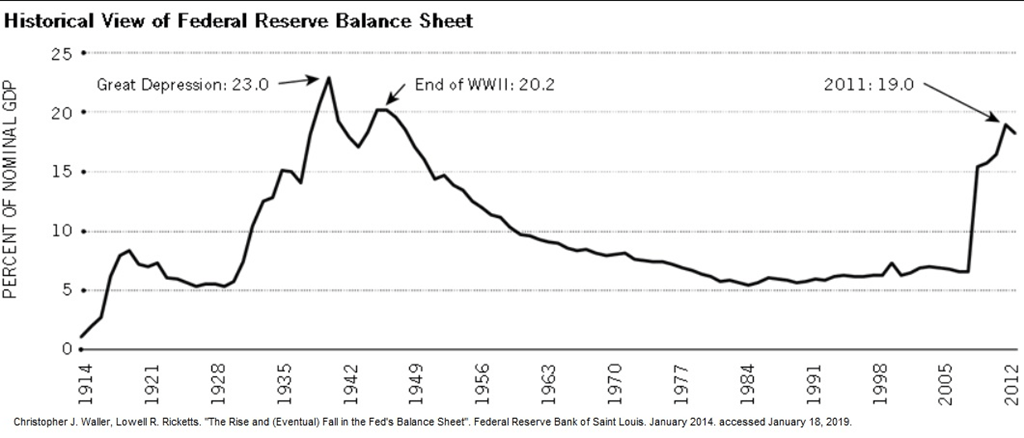
In an article titled “The Rise and (Eventual) Fall in the Fed’s Balance Sheet” there is a chart depicting the historical level of the Federal Reserve Balance Sheet relative to nominal GDP. The chart, as seen below, potentially implies that, the contraction of the Federal Reserve balance sheet could be the biggest and best thing for the economy and liquidity of the markets.
Interpretation
The last peak in the Federal Reserve balance sheet, relative to nominal GDP, was in the period from 1937-1940. In that period (‘37-‘40), interest rates bottomed out and started a long march to peak in 1981. Also in that time, from 1940 to 1981, the Dow Jones Industrial Average ranged from a low of 42.42 on April 28, 1942 to a high of 1,051.70 on January 11, 1973 (+2,379.25%).
Also worth noting is the minor decline in the Fed balance sheet relative to nominal GDP from 1917 to 1929. In that period, the Dow Jones Industrial Average increased from 69.29 on December 24, 1917 to 380.33 on August 30, 1929 (+448.89%).
The critics of punch bowl economics might be surprised when they find that the exact opposite is likely to happen when the Federal Reserve attempts to reduce their balance sheet AND interest rates increase. History suggests that taking away the “punch bowl” actually improves conditions for greater market stability and liquidity, for a while at least. Sometimes, less is more.
Posted in Federal Reserve Bank, less is more, QE, Quantative Easing
According to Yahoo!Finance, “Camber Energy, Inc. (CEI), an independent oil and natural gas company, engages in the acquisition, development, and sale of crude oil, natural gas, and natural gas liquids (NGL) in Texas and Oklahoma.”
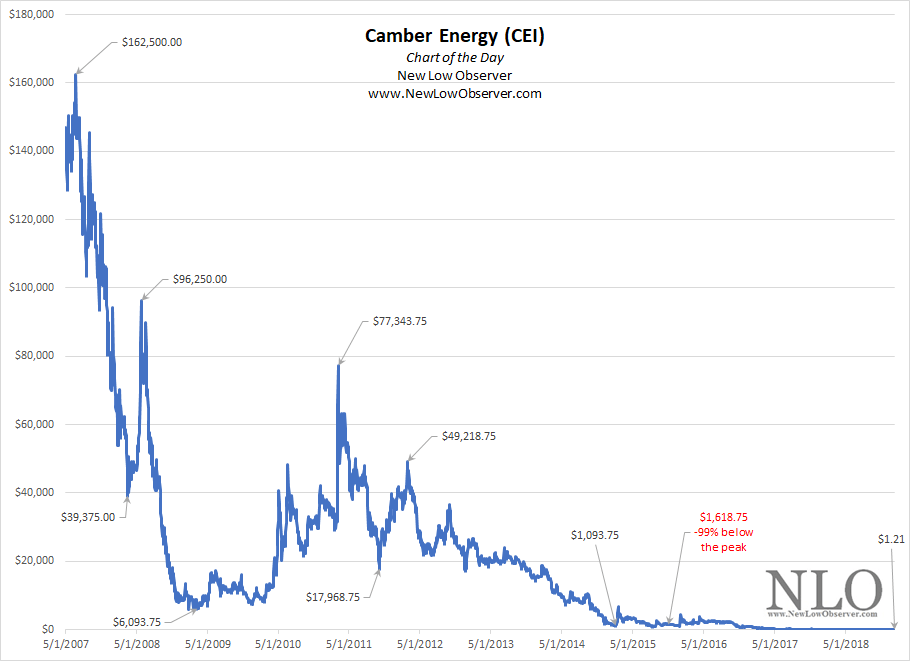
The Study of Failure
“Problems in the New England economy, and particularly its real estate markets, have in recent months led to growing problems at many regional banks and savings associations. Last week the Governor of Rhode Island shut down 45 credit unions and banks that had been insured by a private insurer that said it might not be solvent. (Labaton, Stephen. "U.S. IS TAKING OVER A GROUP OF BANKS TO HEAD OFF A RUN." New York Times, 7 Jan. 1991. Infotrac Newsstand. Accessed 17 Dec. 2018.).”
Posted in CEI, Chart of the Day, The Study of Failure
According to Yahoo!Finance, the high yield junk bond fund iShares iBoxx $ High Yield Corp Bond ETF (HYG) “seeks to track the investment results of the Markit iBoxx® USD Liquid High Yield Index (the ‘underlying index’).”
Since 2007, HYG has had the following performance:
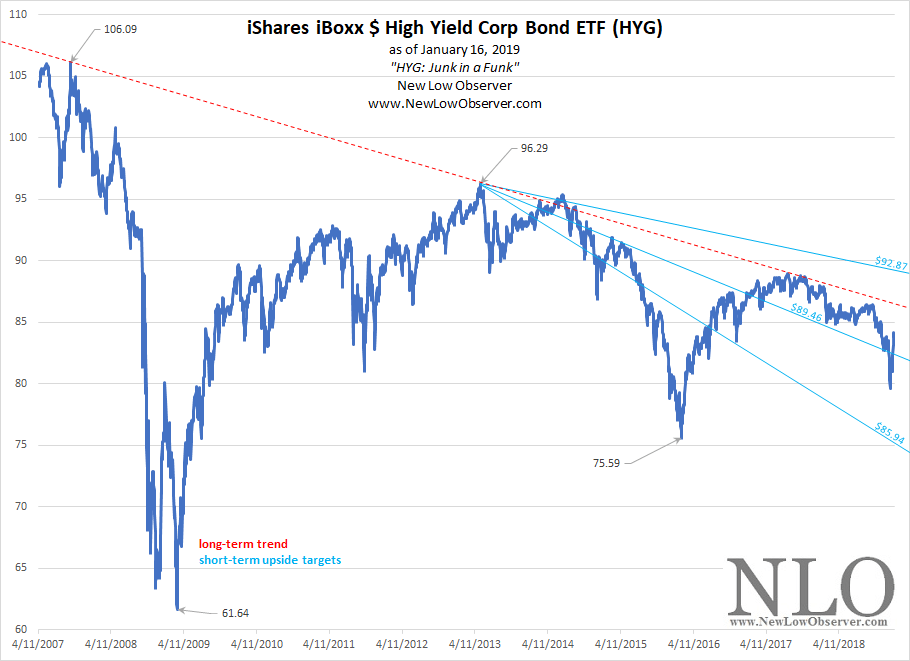
We have provided upside targets based on the intermediate peak of April 8, 2013 at $96.29 and the low of February 11, 2016 at $75.59.
It can be safely said that HYG has a long-term trend with a downside bias. All HYG needs to do is exceed the $92.87 to confirm a “stable” and “improving” market for high yield instruments. Until that time, speculators in high yield products should pay close attention to the prospect of a potential double top and resistance to the long-term trend in the market that has been in place since 2007.
Posted in high yield, HYG, junk
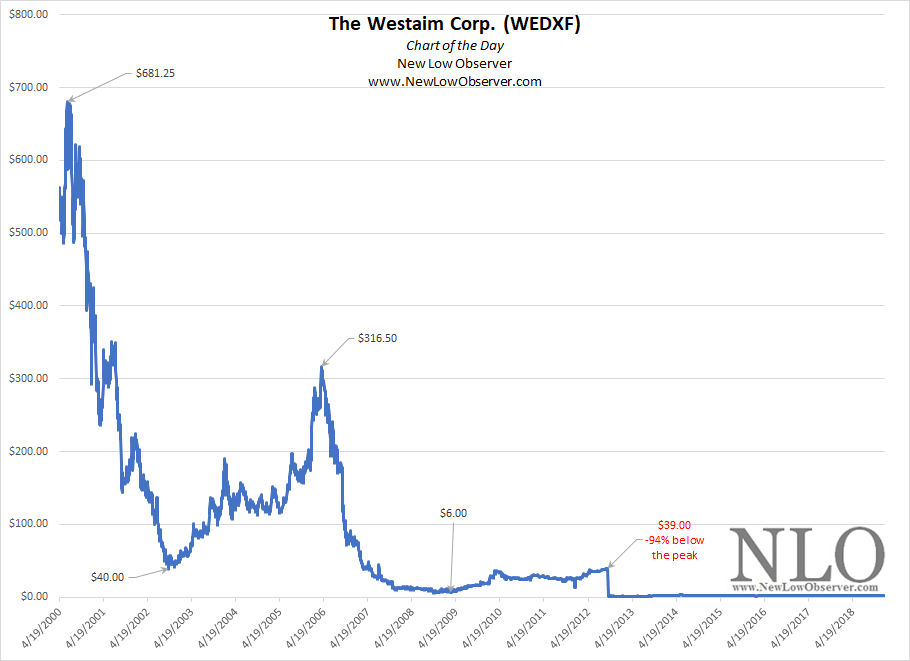
According to Yahoo!Finance, “The Westaim Corporation (WEDXF) is a private equity firm specializing in direct and indirect investments through acquisitions, joint ventures, secondary investments both direct and indirect, fund of fund investments, and other arrangements.”
The Study of Failure
“While the weakening of the New England economy undoubtedly hurt, the last year has made clear that the company's most severe problems were the result of its own mistakes. It lent an astounding 36.7 percent of its total loans for risky commercial real estate projects, far more than neighboring banks, and it failed to adequately manage subsidiary banks and reduce costs.
“By the time a new management team headed by Lawrence K. Fish was installed early last year, it was too late. Like a leaky boat that fills with water faster than it can be bailed out, bad loans kept emerging faster than the company could solve its problems by slashing its payroll and selling subsidiaries.(Quint, Michael. "A Success Story Turn Sour in New England." New York Times, 7 Jan. 1991. Infotrac Newsstand. Accessed 17 Dec. 2018.).”
Posted in Chart of the Day, The Study of Failure, WEDXF
Below are the valuation targets for Accenture (ACN) for the next 10 years. Continue reading