Below are the valuation targets for Insperity Inc. (NSP) for the next 10 years. Continue reading
- Japan
- Market Indicator
- Price Momentum Indicators
- Richard Russell
- Silver
- Speed Resistance Lines
- U.S. Dividend Watch List

Below are the valuation targets for Insperity Inc. (NSP) for the next 10 years. Continue reading
Below are the valuation targets for Hershey Co. (HSY) for the next 10 years. Continue reading
Below are the valuation targets for Yum! Brands (YUM) for the next 10 years. Continue reading
According to Yahoo!Finance, “Box Ships Inc. provides commercial management services to shipping companies worldwide. The company was founded in 2010 and is based in Voula, Greece.”

The Study of Failure
“Then the Fed came to the rescue. It helped arrange a loan for the Hunts. It arranged a bail-out for First Pennsylvania Bank, and the monetary authorities approved a loan-guarantee for Chrysler ("If one could watch financial markets on television Thursday..." UPI Archive: Financial, 14 Dec. 1980. Infotrac Newsstand. Accessed 23 Jan. 2019.).”
Posted in Chart of the Day, The Study of Failure
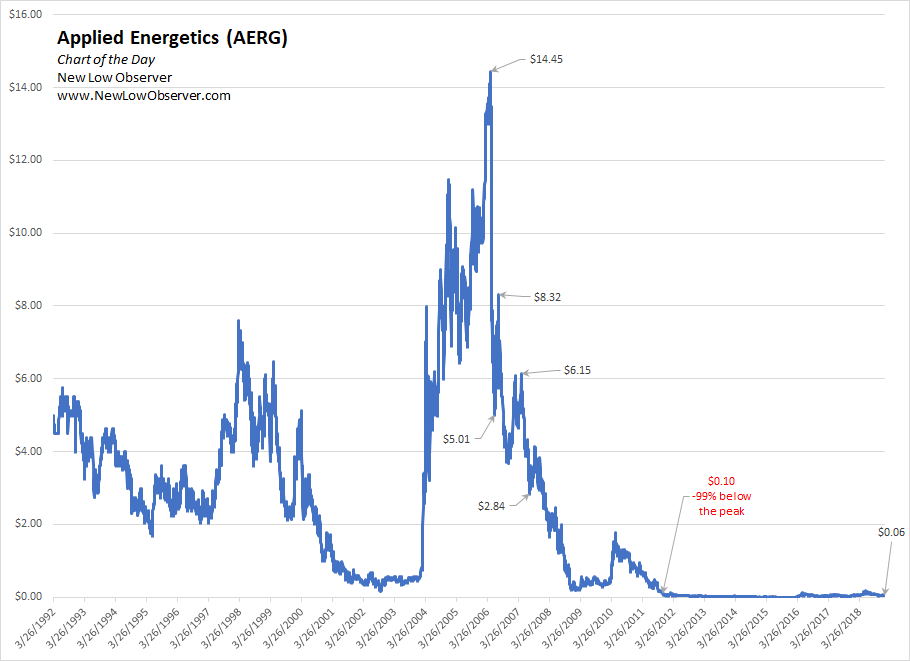
According to Yahoo!Finance, “Applied Energetics, Inc. engages in the development of ultra-short pulse lasers, laser guided energy, and direct discharge electrical products for military and commercial applications worldwide.”
The Study of Failure
“'Here is the government guaranteeing borrowing, which means a note by Chrysler is equivalent to a Treasury bond,' said Burns. 'If Chrysler gets this loan - which is riskless to the banks - a failing and inefficient firm will get credit, while a well-managed, credit-worthy firm will not get credit.' ("Comparing the Chrysler Corp. with a private individual, former..." UPI Archive: Domestic News, 27 Oct. 1980. Infotrac Newsstand. Accessed 23 Jan. 2019.).”
Posted in AERG, Chart of the Day, The Study of Failure
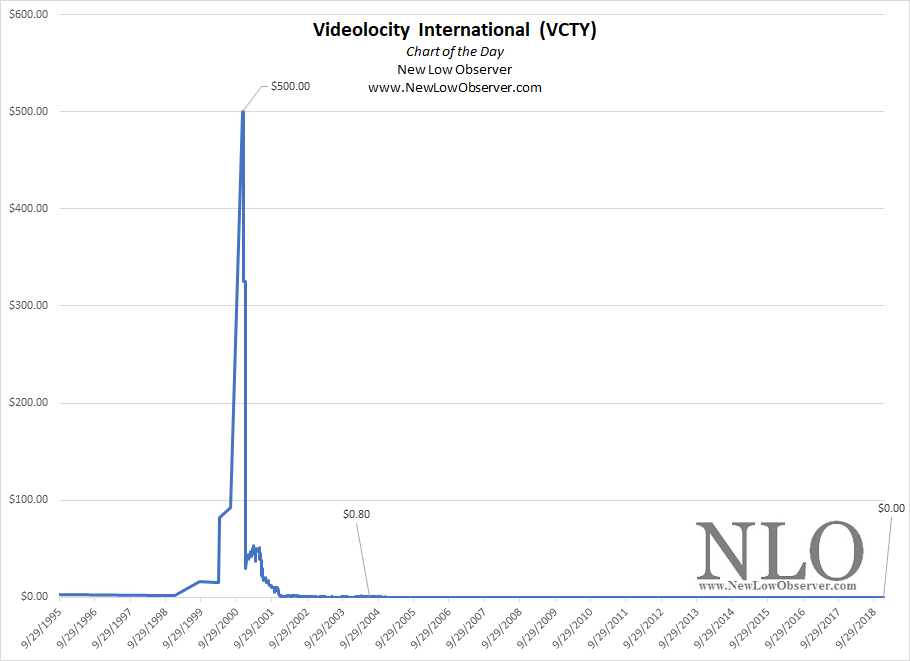
According to Yahoo!Finance, “Videolocity International, Inc., through its subsidiaries, operates as a Chinese management education and consulting firm in the People's Republic of China. Videolocity International, Inc. is based in Henderson, Nevada.”
The Study of Failure
“A Chrysler-style bailout or a tax on atomic power are options for keeping the Three Mile Island utility solvent while it cleans up its stricken reactor, a Nuclear Regulatory Commission report said Friday ("Keeping Three Mile Island utility solvent." UPI Archive: Financial, 28 Nov. 1980. Infotrac Newsstand. Accessed 23 Jan. 2019.).”
Posted in Chart of the Day, The Study of Failure, VCTY
Below are the valuation targets for Moody’s Corp. (MCO) for the next 10 years. Continue reading
Below are the valuation targets for Clorox Company (CLX) for the next 10 years. Continue reading
Below are the valuation targets for United Parcel Service (UPS) for the next 10 years. Continue reading
Below are the valuation targets for Lennox International (LII) for the next 10 years. Continue reading
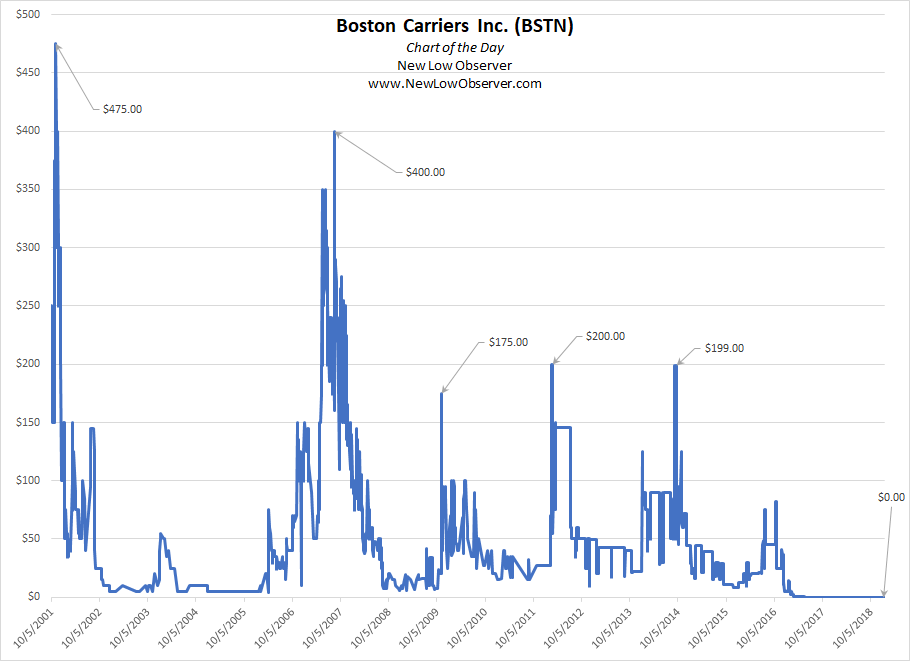
According to Yahoo!Finance, “Boston Carriers, Inc., through its subsidiary, Poseidon Navigation Corp., owns and operates a dry bulk vessel that transport iron ore, coal, grains, steel products, cement, alumina, and other dry bulk cargoes worldwide. The company was formerly known as Integrated Inpatient Solutions, Inc. and changed its name to Boston Carriers, Inc. in March 2016.”
The Study of Failure
“The Massachusetts House Tuesday passed and sent to the Senate a $41 million funding bill that would avert the threatened shutdown of the bankrupt Boston transit system, which serves 250,000 commuters daily ("The Massachusetts House Tuesday passed and sent to the..." UPI Archive: Domestic News, 2 Dec. 1980. Infotrac Newsstand. Accessed 23 Jan. 2019.).”
Posted in BSTN, Chart of the Day, The Study of Failure
Below are the valuation targets for Schweitzer-Mauduit (SWM) for the next 10 years. Continue reading
Below are the valuation targets for Compass Minerals (CMP) for the next 10 years. Continue reading
Previous Year Performance Review
In our ongoing review of the NLO Dividend Watch List, we have taken the top five stocks on our list from February 2, 2018 and have checked their performance one year later. The top five companies on that list can be seen in the table below.
| Symbol | Name | 2015 Price | 2016 Price | % change |
| PG | Procter & Gamble | 84.25 | 97.47 | 15.7% |
| YORW | The York Water Company | 30.55 | 32.62 | 6.8% |
| MGEE | MGE Energy | 58.35 | 63.52 | 8.9% |
| UGI | UGI Corp. | 45.70 | 57.06 | 24.9% |
| NFG | National Fuel Gas | 49.94 | 58.66 | 17.5% |
| Average | 14.7% | |||
| DJI | Dow Jones Industrial | 25,520.96 | 25,063.89 | -1.8% |
| SPX | S&P 500 | 2,762.13 | 2,706.53 | -2.0% |
The average return from the top five companies was 14.7% compared to a loss of 2% from the market. To our surprise, the best performer was a utility company,UGI Corp (UGI) which rose 25%. Similarly,National Fuel Gas (NFG) did well gaining 17.5% for the year. Our assessment of interest rate rise pushing utility companies valuation down didn't pan out. Instead of rising rate, the 10-year T-bill fell from 2.84% to 2.7%.
We thought that Procter & Gamble (PG) would underperform the market due to its rich valuation. However, the stock rose 15.7% for the year and is not trading at 23.7 P/E. The stock closed this week at all-time high.
U.S. Dividend Watch List: February 1, 2019
It was another good week for the market as the S&P 500 rose 2% for the week. The rally from the bottom has taken the market up 15% and is around 62% retracement on the Fibonacci retracement. Will we see this rally fade in the weeks to come or a re-test of the peak of 2,930? Only time will tell. Until the market (Dow Jones Industrial Average) can break the high with confirmation from the transport, we remain cautious under the assumption of Bear market. Continue reading
Below are the valuation targets for Seagate Technology (STX) for the next 10 years. Continue reading