Since our last posting on March 13, 2015, gold (as represented by the SPDR Gold Shares) has increased by +3.84% while the Philadelphia Gold and Silver Stock Index has increased by +3.40%.
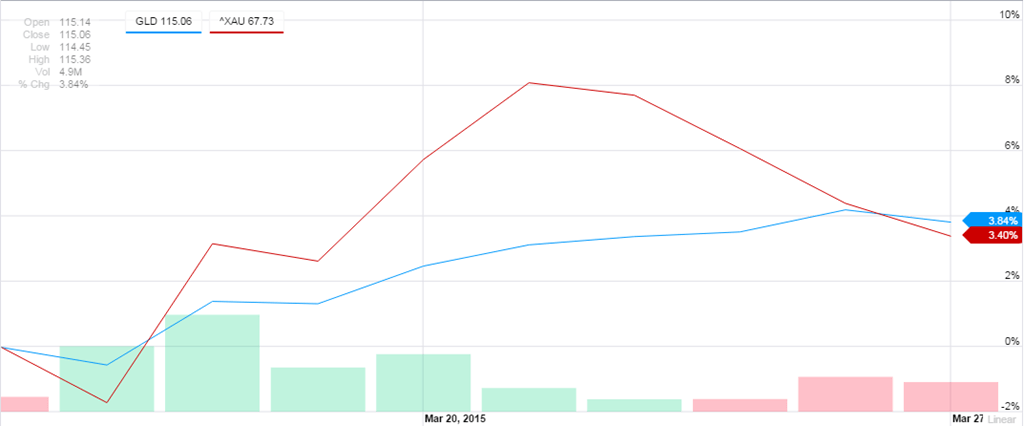

Since our last posting on March 13, 2015, gold (as represented by the SPDR Gold Shares) has increased by +3.84% while the Philadelphia Gold and Silver Stock Index has increased by +3.40%.
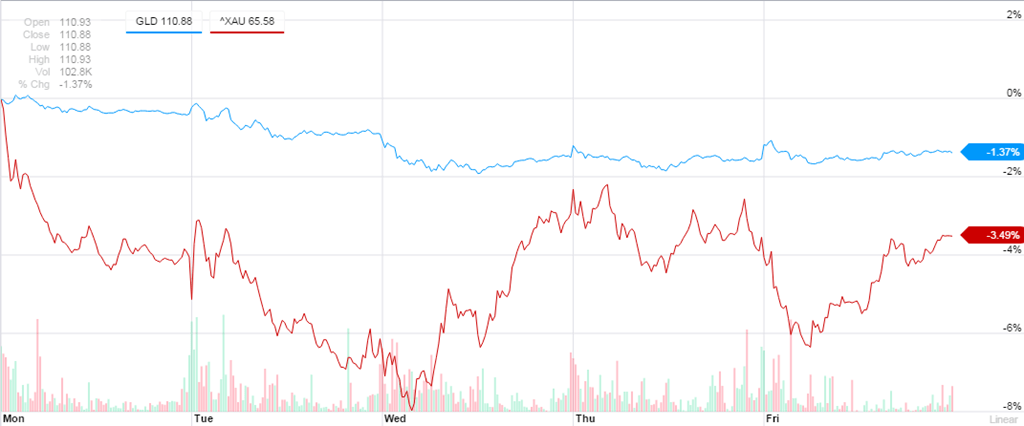
Gold declined –1.37% while the index for gold stocks declined by –3.49% in the past week. The closing numbers for gold stocks would be considered deceptive since the decline was much worse earlier in the week when the decline for the index was as much as –8%.
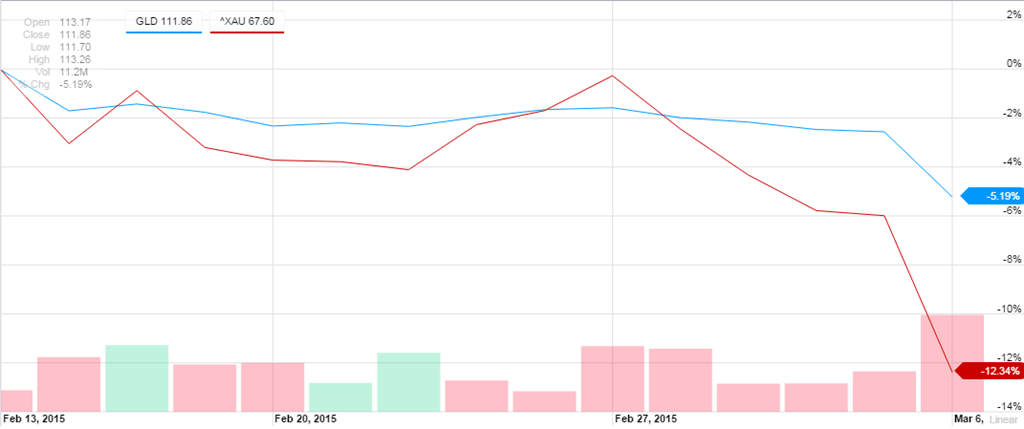
Gold, as represented by the SPDR Gold Shares (GLD), has registered a loss of –5.19% since our last posting on February 13, 2015. At the same time, gold stocks, as represented by the Philadelphia Gold and Silver Stock index (XAU), have declined –12.34%.
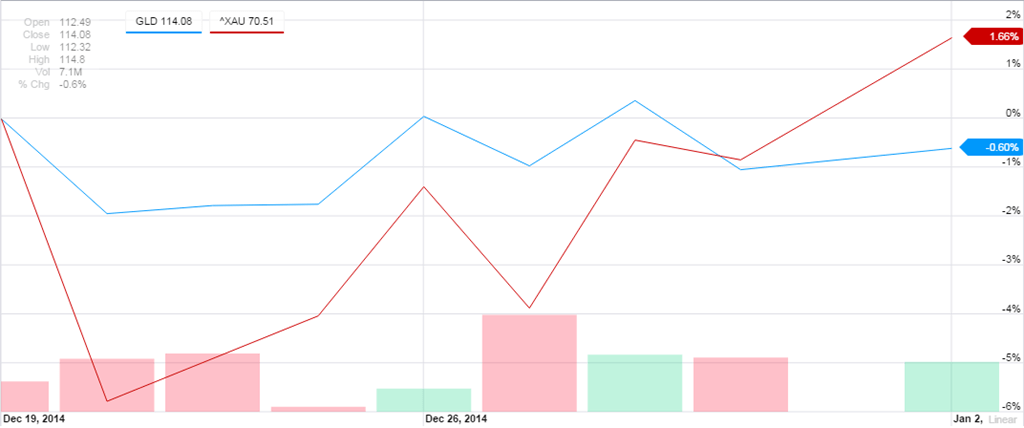
Since our January 30, 2015 posting, the price of gold, as represented by the SPDR Gold Shares (GLD), has declined –4.43% while the Philadelphia Gold and Silver Stock Index (XAU) has declined –2.87%.
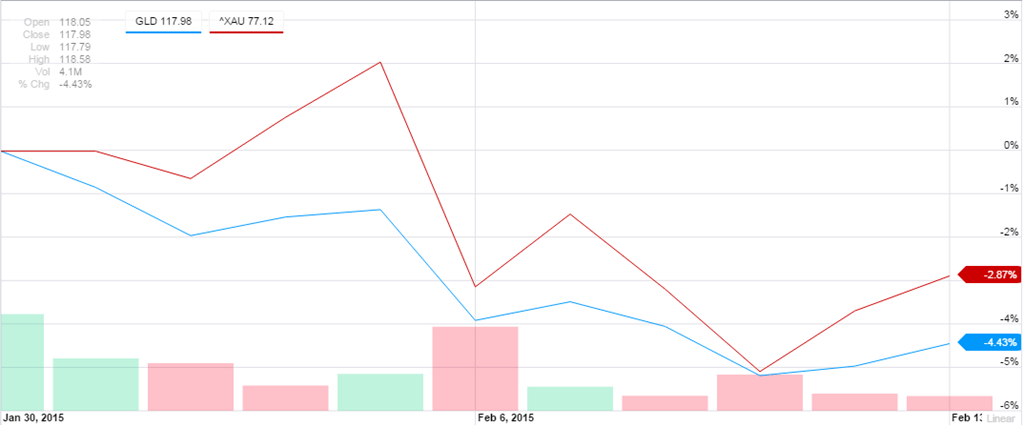
It is unusual that the price of the gold stock index would decline less than that of the price of gold. Either the gold stock index needs to decline much further or the price of gold should rebound. Remember that gold stocks are the sentiment indicator for the price of gold, therefore, the pricing action above might suggest that the gold declines aren’t sustainable.
The Gold Stock Indicator is reflecting this relative strength with the marginal declines as indicated in the chart below.
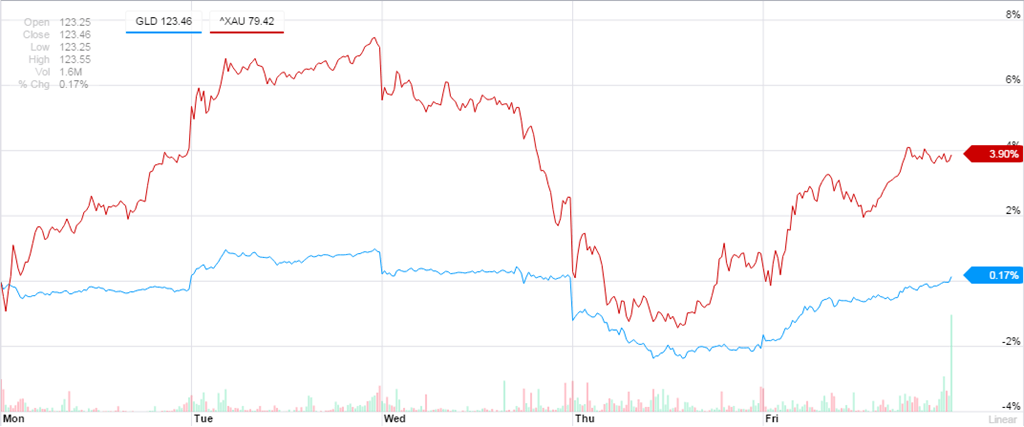
Gold was essentially unchanged this past week while gold stocks were up nearly +4%. So far the trend is pointing to higher gold as the November 2014 low remains in place.
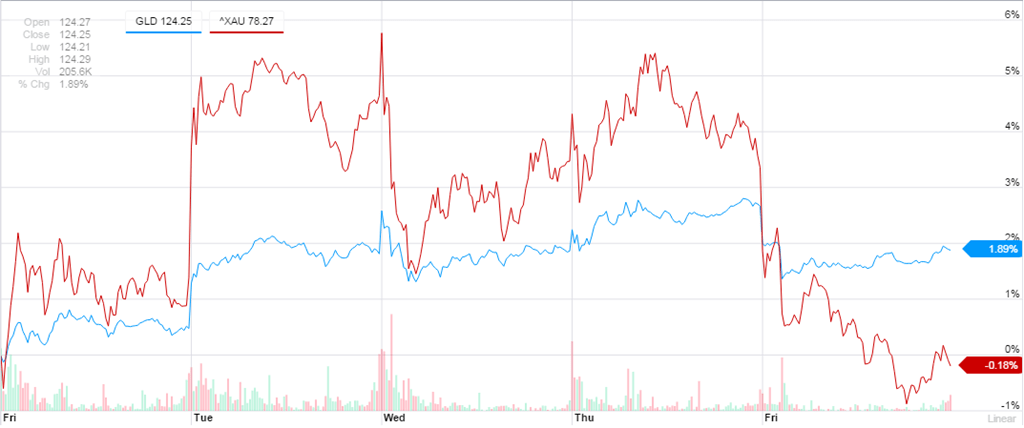
Gold, as represented by the SPDR Gold Shares (GLD), increased +1.89% this week while the Philadelphia Gold and Silver Stock Index (XAU) declined by-0.18%. On a closing basis, each index made new highs this week. However, some ground was given up on Friday.
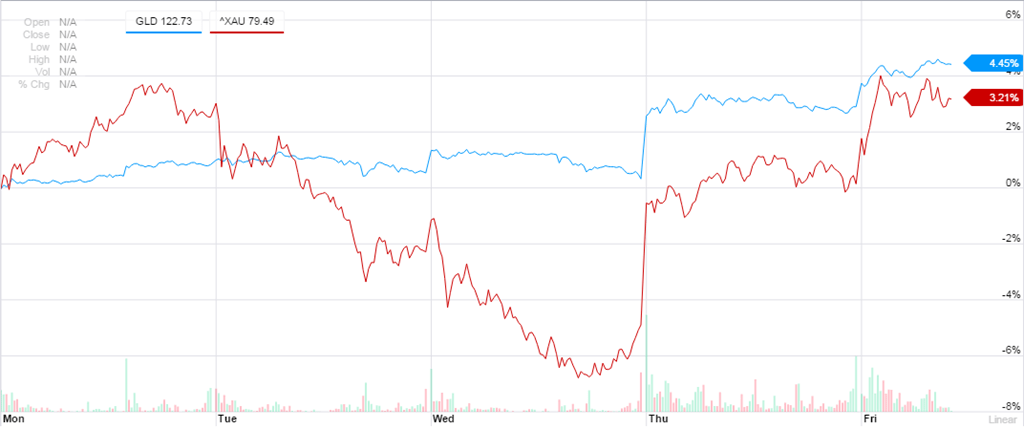
If you like excitement and intrigue then invest in gold. However, if you want a heart pounding adrenaline rush then try investing in gold stocks. This past week, gold did nothing but go up, closing out the week with a gain of over +4%. Gold stocks, on the other hand, tested the fortitude of investors by falling more than –6% but eventually closing up nearly +3%.
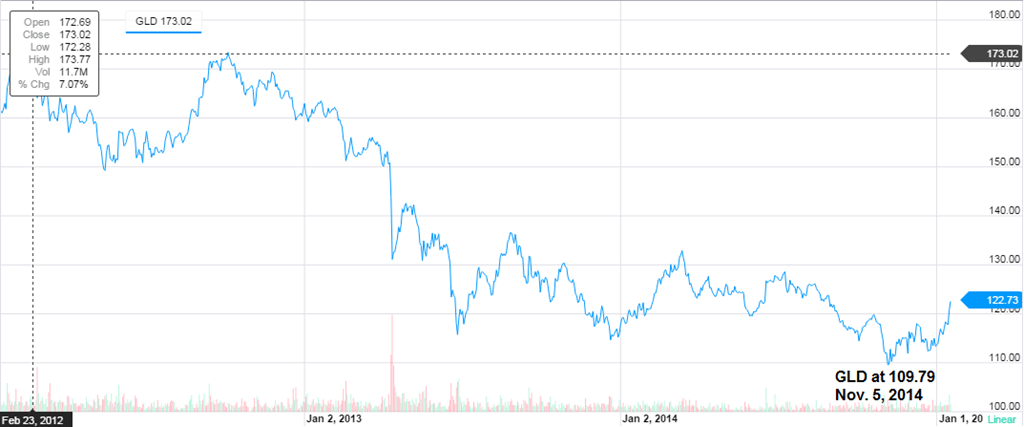
The recent surge of gold was due to the Swiss National Bank’s decision to remove the cap on the Swiss Franc. Many are calling the Swiss decision a turning point in the bear market for gold. However, we’d want to remind investors that the turning point, if in fact it is the ultimate low for gold, was on November 5, 2014. That was the time and place when the low was established before increasing in value.
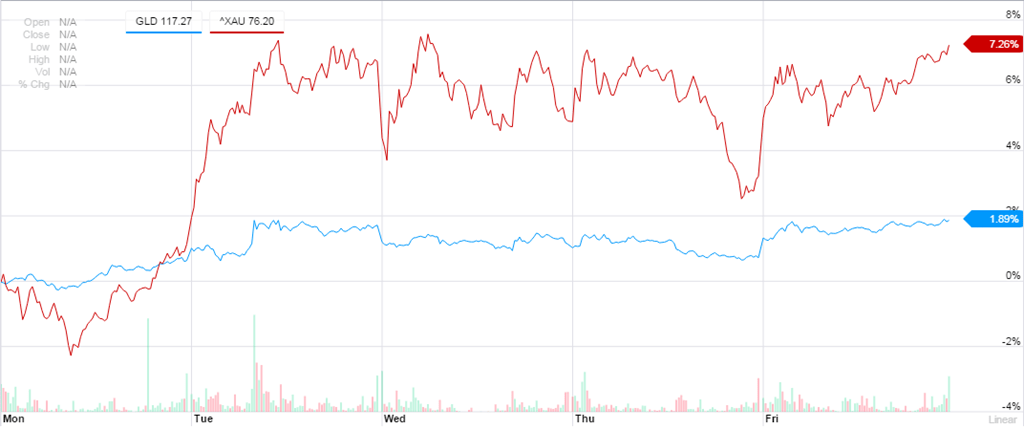
Gold, as represented by the SPDR Gold Trust (GLD), gained +1.89% while gold stocks, represented by the Philadelphia Gold and Silver Stock Index (XAU), gained +7.26% in the last week.
Overall, a quiet couple of weeks for gold and gold stocks as represented by the gold ETF and XAU index, respectively.
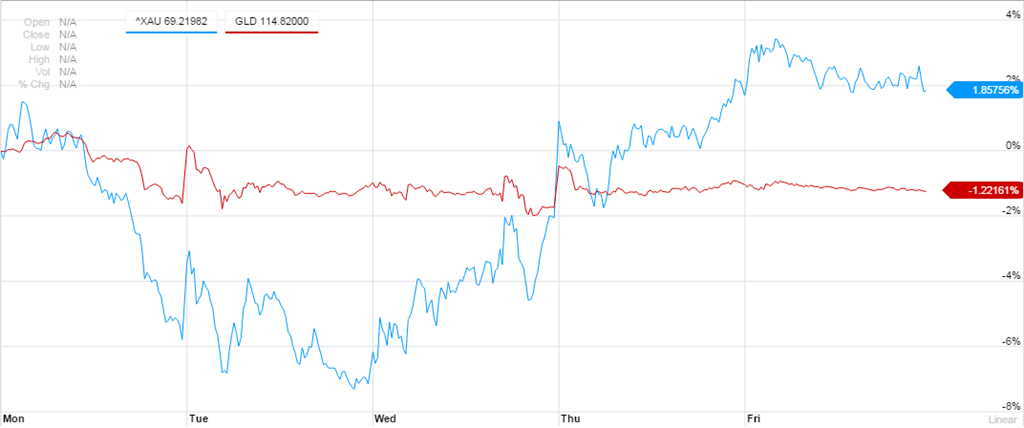
Gold stocks were up while gold was down for the past week. However, this isn’t a complete picture of what it took for gold stocks end the week up. The chart below shows the dramatic loss of –7% by late Tuesday and the subsequent gain of +10% by early Friday.
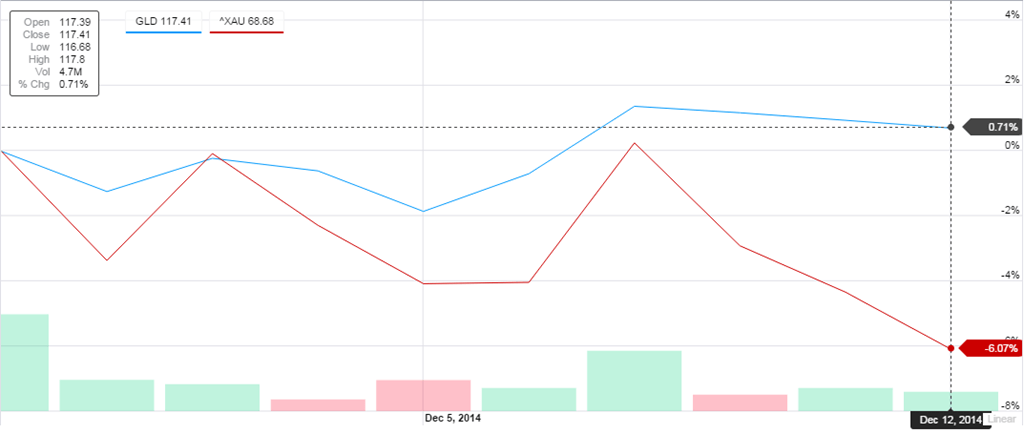
In the past two weeks, the price of gold has meandered in a tepid range. Alternatively, gold stocks as represented by the Philadelphia Gold and Silver Stock Index decline –6.07%.
Gold stocks were rocked this past week by falling more than –8% on Friday alone. Gold declined by –3.04% for the week.

E. George Schaefer is most synonymous with Dow Theory and its modern application. However, E. George Schaefer was also known for his work in the selection and timing of gold and silver stocks. As a bit of background on E. George Schaefer, in 1960, he wrote a book titled How I Helped 10,000 Investors to Profit in Stocks.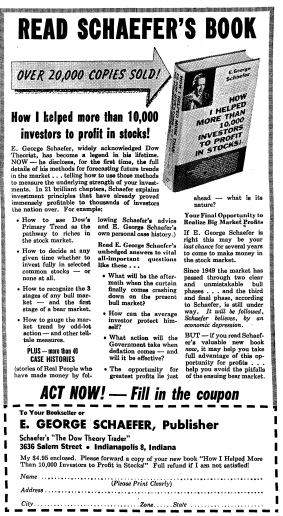
The book was about Dow Theory and its application. According to Richard Russell:
“…Schaefer started his ‘Dow Theory Trader’ service in 1948. this analyst possesses a ‘feel’ for the market and an instinct for the big picture second to none. He is one of the very, very few men who fully comprehend the concept of the primary trend. A warning: if you have ever heard Schaefer speak, do not be fooled by his ‘hoosier-country boy’ style of delivery. For Schaefer has been way ahead of the city boys on Wall Street for a long time.
“Schaefer provided his readers with many important technical studies during the late 1940’s and early 1950’s, and he has always labeled himself a ‘modern Dow Theorist.’ Schaefer has combined many technical considerations with his reading of the Averages, and I have found his thinking along these lines to be sound.
“In my library is a copy of Schaefer’s June 18, 1949 report, in which he predicted a major new bull market. His reasoning was brilliant, and if he had never written anything else, he would rate a ‘superb’ on this one alone. Personally, I wish that Schaefer had continued with his earlier technical studies, but those were written when the technical approach (and, in fact, almost any approach) was rare, and it is possible that he is now a bit tired of the ‘teaching’ approach which was a feature of his earlier letters.”
Our personal favorite by E. George Schaefer was a Barron’s article dated June 22, 1959 titled “Final Bullish Upsurge In Many Stocks Just Starting?” This article stands as a lone beacon for how modern Dow Theorists can understand the distinction between a bull and bear market as part of the primary trend. We note that at the time, Richard Russell was of the view that the stock market was due for a bear market and called a bear market in 1961. Schaefer was sticking to his 1959 call and told investors to hold onto their positions which was rewarded with another +40% increase in the Dow Jones Industrial Average.
Schaefer and Gold Stocks
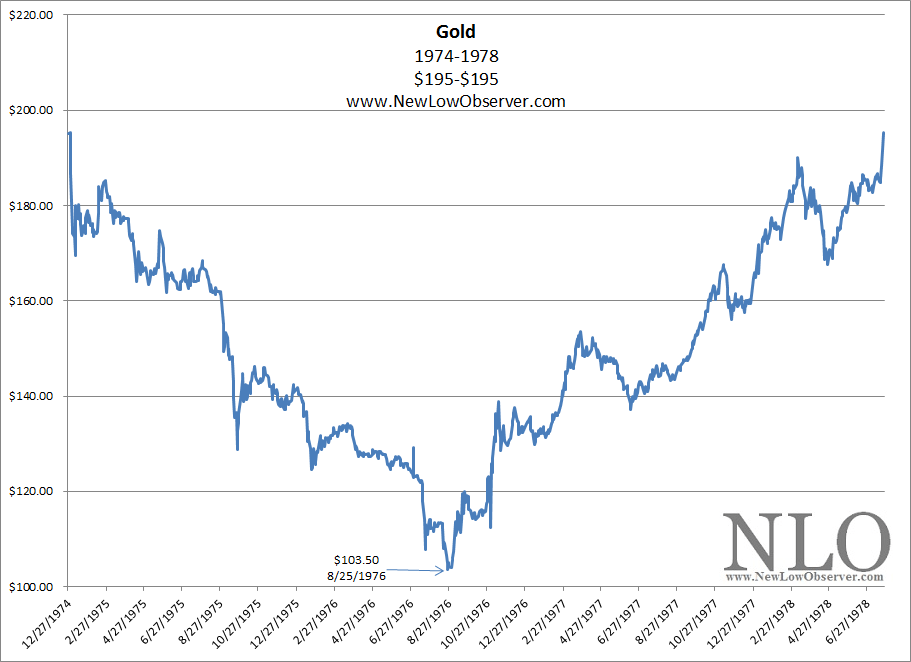
“Personally, I have no idea whether the 103.50 low of August 25 [1976] was THE LOW for gold or not. I would guess, since many experts are now freely predicting a drop below 100, that the 103 level represent the bottom (Russell, Richard. Dow Theory Letters. September 15, 1976. page 5).”
“I just received the September issue of the Bank Credit Analyst and Editor Boeck states that “for the time being, fears of an excessive expansion of the world’s money supply are likely to prove unfounded. Rather, the more realistic worry is the one of contraction. Boeck also notes that the drop in the gold price is deflationary since it shrinks world central bank reserves (Russell, Richard. Dow Theory Letters. September 3, 1976. page 5.).”
Observation: Central banks don’t like declining reserves. The perception of deflation usually ends when it can be clearly identified by the public.