
- Japan
- Market Indicator
- Price Momentum Indicators
- Richard Russell
- Silver
- Speed Resistance Lines
- U.S. Dividend Watch List
Category Archives: crash
1937-1939: The Years of Investing Dangerously
After the fall in the market from February 2020 to March 2020, the most accurate question to ask is this:

After recovering so much for the March 2020 lows, what is the prior precedent for the market? As we said in our recent review of Atul Auto Limited:
“markets are driven by precedent and the price action that we’re currently seeing is not the first time that the stock price has suffered such a decline.”
The market is always on the hunt to drive investors mad and the best way to accomplish this is by snatching defeat from the jaws of victory.
To the question above, we have lined up the years of 1937-1939 as our first qualifying entry (there are more). In this two year period, the market experienced two bear markets (-20% or more) and two market corrections (-10% or more).

Make note of the fact that if this happened to the Dow Jones Industrial Average then it is likely that we could find the same with any market that existed at the same time, for obvious reasons.
See Also:
-
Atul Auto Limited October 3, 2020
Boeing: Manic Panic
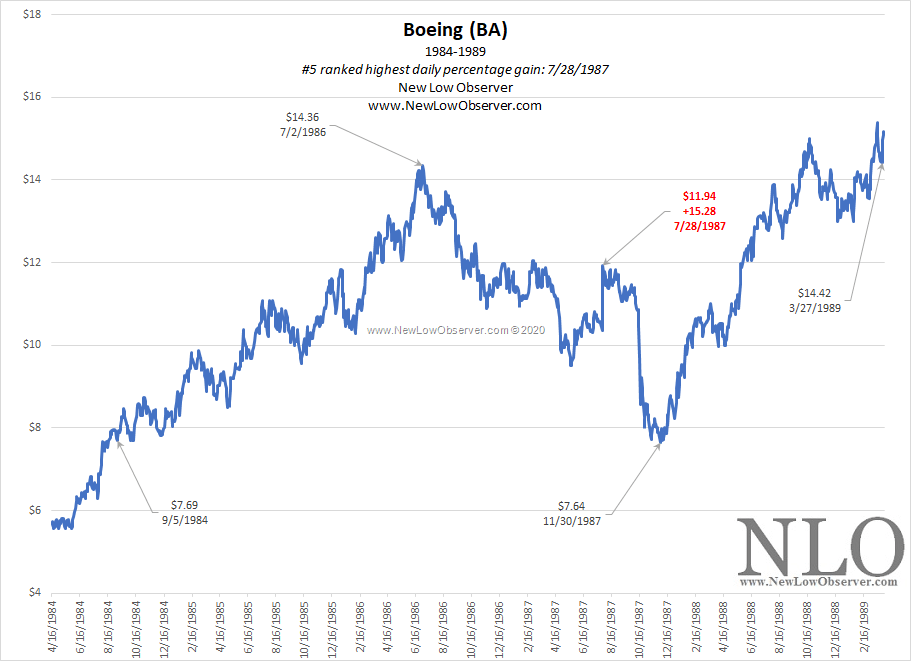
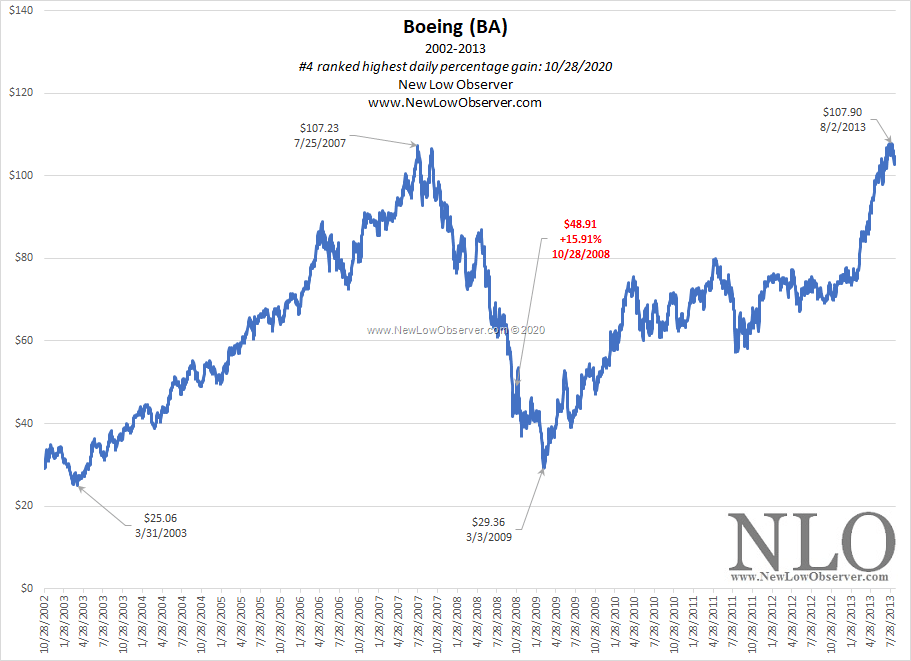
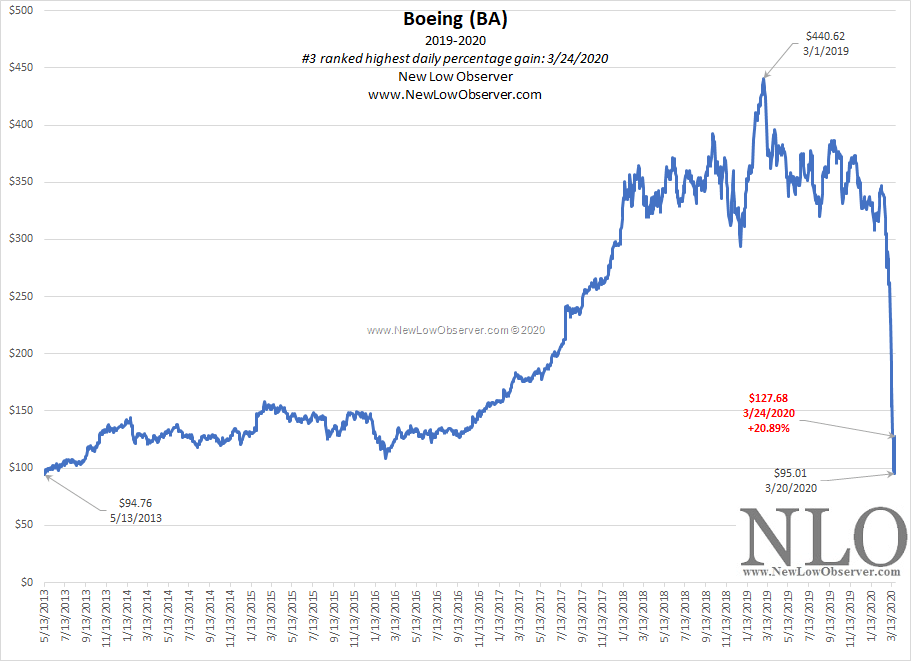
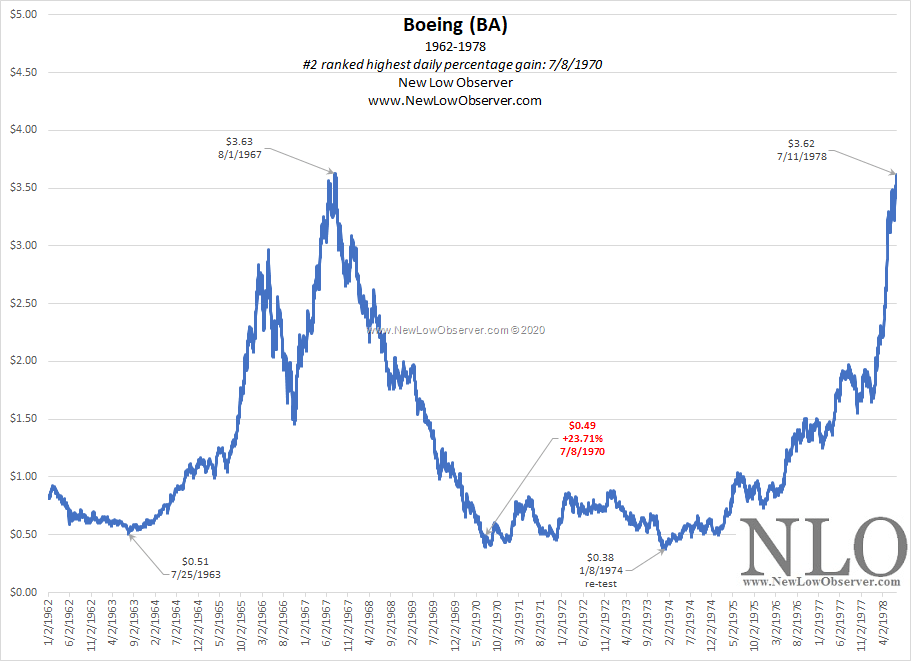
As we register daily percentage increases beyond all historical norms for Boeing, we worry the message in the price is being misinterpreted. So to help put this matter into the proper context, we have outlined the top 5 daily percentage increases in Boeing’s share price below.
Number 5: July 28, 1987
Number 4: October 28, 2008
Number 3: March 24, 2020
Number 2: July 8, 1970
Number 1: March 25, 2020
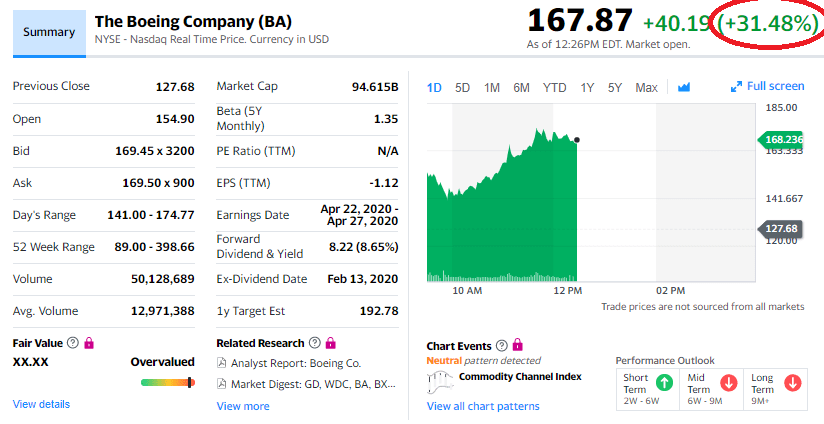
Our Take
In each of the top 2, top 4, top 5 & top 6 single day percentage gains, Boeing was far from a reversal of the stock price to the upside. The lone exception, that could be argued, was the 1970 increase of +23.71%, which took Boeing to a new low by 1974.
We have intentionally included the prior low before the crash in the stock price. Also, we included the following peak price to put into perspective the amount of time and money that may have been lost before getting back to a “break-even” point (excluding dividends).
The fact that Boeing is having these significant increases in the price in a single day is a warning sign that investors must take heed of. This isn’t a recovery, instead, it is manic panic that will bring lower lows.
See Also: The Most Dreaded Chart of Boeing
Bitcoin December 2017: Downside Targets
“A mob’s a monster; heads enough, but no brains.” –Benjamin Franklin
REIT: Index Crash from 1972-1979
Few are aware of the colorful history of the real estate investment trust industry. Much of the mystery in the industry has to do with changes to company names and legal definitions of what a REIT actually is, thereby rendering the history to the realm of the forgotten.
A quick look at the REIT Share Price Index in 1979 (Brody, Michael. Sounder Ground. Barron’s. May 21, 1979. page 4.) should shed some light on an industry group that, from 1960 to December 1971, had experienced two jarring routs of –60% and –80%. The REIT Index below has not survived to the present as a majority of the companies (greater than 80%) simply don’t exist after their failure/bankruptcy or forced mergers.
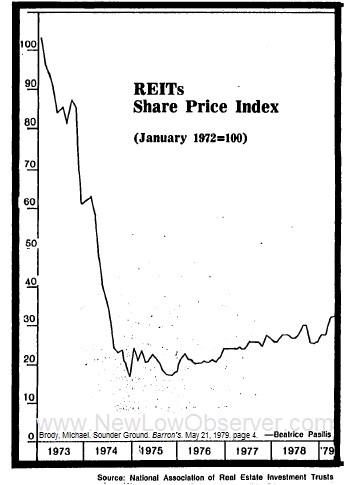
The reasons for the decline in the period from 1972 to 1974 are many. Surprisingly, investment analysts at the time were simultaneously arguing that falling and rising interest rates were the threat to the REIT industry. As we enter a secular rising interest rate environment, REIT investors should check the foundation that their investments are build on.
see also: U.S. Realty: 1921-1939
Posted in crash, real estate, REIT
Flash Crash Follies
Flash Crash Follies is a running tally of stocks that get ensnared by regulations as an outgrowth of the May 6, 2010 "flash crash." While the explosive crash of stocks (either up or down) on the NYSE is a symptom to a bigger problem, we want to chronicle what was never reported to have happened before May 6, 2010. Action packed moves in the price of stocks that will bring pleasure, pain and finally resignation at the state of the free market as we know it.
We've added commentary from the mouthpiece of the NYSE or NASDAQ to explain away "erroneous" trades or canceled orders. Before long we're going to hear politicians getting into the fray on specific "erroneous" trades. What will this devolve into nobody knows for sure. However, we're willing to bet that in due time, the treatment of the symptom will become a distinct problem of its own.
"...the folly of human laws too often encumbers its operations." Adam Smith
September 28, 2010 (date contains Bloomberg screen shots from third party source)
Apple (AAPL), Research In Motion (RIMM), IBM (IBM), Dell (DELL), General Electric (GE), Oracle (ORCL), Microsoft (MSFT), Hewlett-Packard (HPQ)
Stocks of the above noted companies took a dive at the same time on September 28, 2010. The exchanges didn't provide commentary on the actions taken as a result of the instantaneous decline and rise in value. many have attributed specific declines to "newsworthy" issues related to the specific companies. However, no one has stepped forward to explain the statistical anomally of so many companies experiencing the same issue at exactly the same time.
Apple (AAPL), Research In Motion (RIMM), IBM (IBM), Dell (DELL), General Electric (GE), Oracle (ORCL), Microsoft (MSFT), Hewlett-Packard (HPQ)
Stocks of the above noted companies took a dive at the same time on September 28, 2010. The exchanges didn't provide commentary on the actions taken as a result of the instantaneous decline and rise in value. many have attributed specific declines to "newsworthy" issues related to the specific companies. However, no one has stepped forward to explain the statistical anomally of so many companies experiencing the same issue at exactly the same time.
July 29, 2010 (date contains article link from third party source)
Cisco Corp. (CSCO)
At 10:41am EST, Cisco (CSCO) shares spiked by 11% due to an order imbalanced triggered by 100 shares. CSCO rose from $23.37 to $26 which triggered circuit breakers prompting Jamie Selway, managing director at broker White Cap Trading LLC in New York, “We’re stopping trading in incomparably liquid products because of dumb mistakes...” In this instance, the NYSE-owned AMEX which handles very few trades in CSCO could not fulfill orders placed on their exchange even through there were plenty of shares being trades on alternative exchanges. Ultimately, CSCO was trading with the liquidity of a penny stock. Soon enough, firms with intimate knowledge of where they place their trade can play the illiquidity to their advantage. The AMEX and other small exchanges will be under attack.
July 23, 2010 (date contains article link from third party source)
Genzyme Corp. (GENZ)
At 1:18pm EST and 1:25pm EST, Genzyme Corp. (GENZ) triggered circuit breakers when the stock attempted to rise by more than 10% on two separate occasions within the same day due to rumors about a takeover. Nasdaq OMX spokesman Robert Madden gave no justification for the halt in trading. However, traders and money managers expressed the sentiment that “at some point, you need to let efficient market theory rule how stocks trade.” In this case, Genzyme wasn't allowed to rise as much as speculators were willing to bid the price up.
July 6, 2010 (date contains article link from third party source)
Anadarko Petroleum (APC)
At 10:56am EDT to 11:01am EDT, Anadarko shares trade from $39.14 to $99,999.99. “‘We are still learning from the experience,’ he [Ray Pellechia] said.”
June 29, 2010 (date contains article link from third party source)
Citigroup (C)
At 1:03pm EDT, Citigroup shares trade from $3.80 to $3.3174 or down 12.7%. “The erroneous trade was subsequently canceled, NYSE spokesman Ray Pellechia said.”
June 16, 2010 (date contains article link from third party source)
Washington Post (WPO)
At 3:07pm EDT Washington Post stock trades from $450 to $919 or up 104%. All trades were cancelled. “‘What happened today was not due to a substantive, true move in the stock. It was simply an error,’ NYSE spokesman Ray Pellechia said.”
Email our team here.