Below is the Nifty 50 Index from 2009 to 2023 applying the Price Momentum Indicator. Continue reading
- Japan
- Market Indicator
- Price Momentum Indicators
- Richard Russell
- Silver
- Speed Resistance Lines
- U.S. Dividend Watch List

Below is the Nifty 50 Index from 2009 to 2023 applying the Price Momentum Indicator. Continue reading
Below is the Nifty 50 Index from 2009 to 2023 applying the Price Momentum Indicator. Continue reading
Below are the downside targets based on the work of Charles H. Dow. Continue reading
Below are the downside targets based on the work of Charles H. Dow. Continue reading
Posted in Charles H. Dow, Dow Theory, downside, India, Nifty 50, Nifty Fifty
Below is the performance of the Vicker’s Favorite Fifty OTC stocks as published on October 30, 1961 by Barron’s covering data from September 1, 1961 to September 4, 1962:
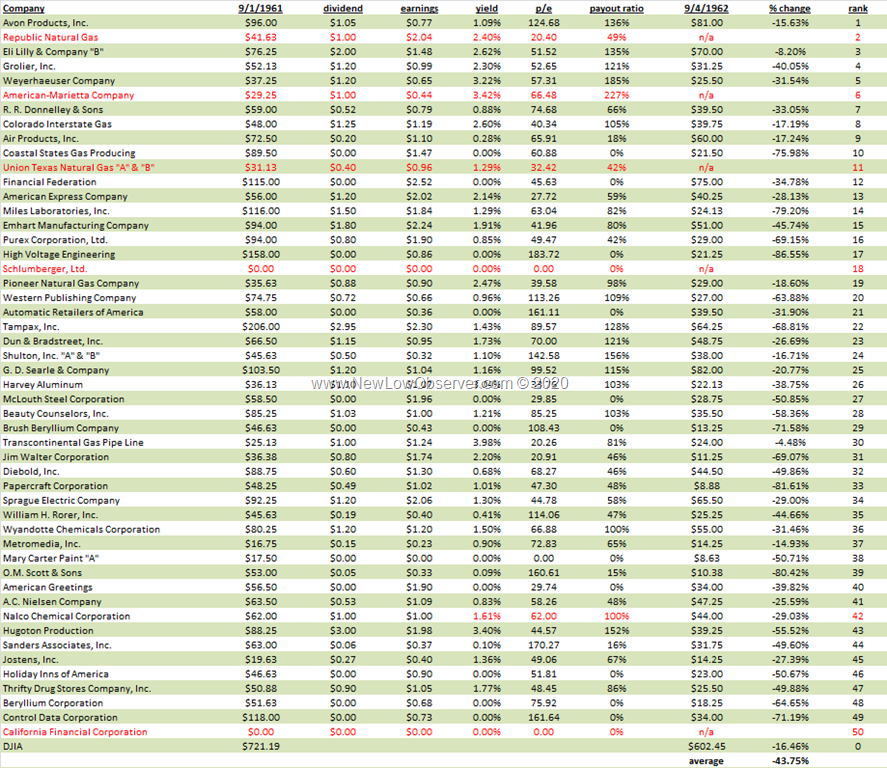
In the period from September 1, 1961 to September 4, 1962, the Dow Jones Industrial Average declined –16.46% compared to the overall change of Favorite Fifty OTC stocks at –43.75%. It is very important to contrast the Favorite Fifty OTC stocks to the Favorite Fifty NYSE stocks. The OTC stocks are small cap companies and favor growth over income which is found in the NYSE list.
The breakdown of the data based on dividend yield, price-to-earnings ratios, and dividend payout ratio.
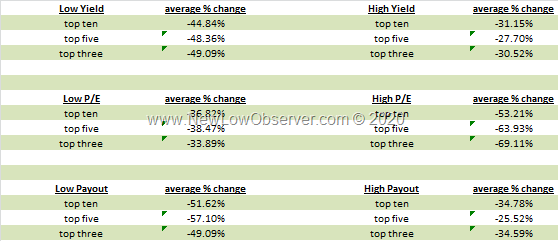
The “best” performance was achieved by no group listed here. With the Dow Jones Industrial Average declining by -16.46%, no single subset of stocks managed to perform better.
Note:
See also:
Posted in Fabulous Fifty, Favorite Fifty, Nifty Fifty, OTC
Below is the performance of the Nifty Fifty as published on June 6, 1960 by Barron’s covering data from September 1, 1961 to September 4, 1962:
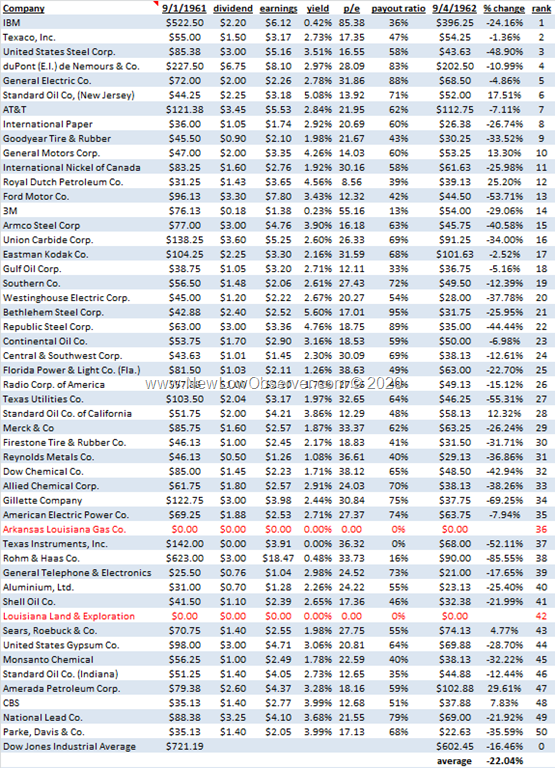
In the period from September 1, 1961 to September 4, 1962, the Dow Jones Industrial Average declined –16.46% compared to the overall change of –22.04% in the Nifty Fifty. The breakdown of the data based on dividend yield, price-to-earnings ratios, and dividend payout ratio.
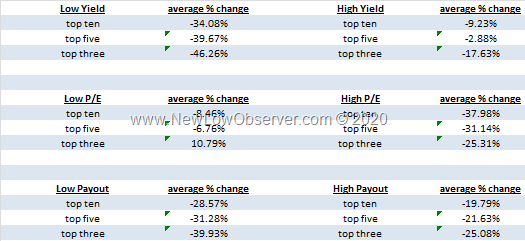
The best gain was achieved by the top three stocks in the Low P/E category with an increase of +10.79%.
Note:
See also:
Posted in Fabulous Fifty, Favorite Fifty, Nifty Fifty
Below is the performance of the Nifty Fifty as published on June 6, 1960 by Barron’s covering data from March 28, 1960 to March 20, 1961:
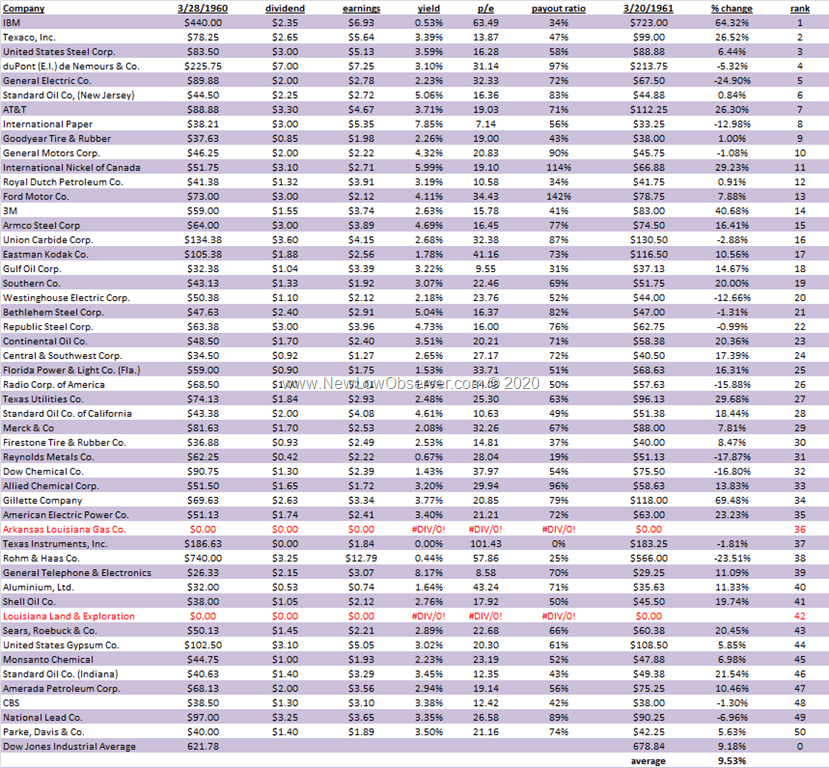
In the period from March 28, 1960 to March 20, 1961, the Dow Jones Industrial Average increased +9.18% compared to the overall change of +9.53% in the Nifty Fifty. The breakdown of the data based on dividend yield, price-to-earnings ratios, and dividend payout ratio.
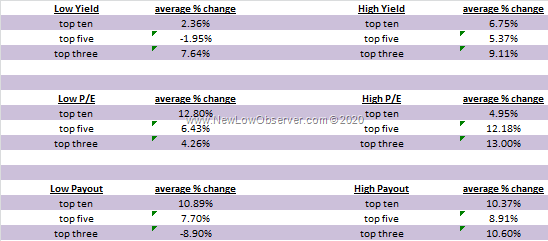
The best gain was achieved by the top three stocks in the High P/E category with an increase of +13.00%.
Note:
See also:
Posted in Fabulous Fifty, Nifty Fifty
Below is the performance of the Nifty Fifty as published on September 28, 1953 by Barron’s covering data from June 29, 1953 to June 28, 1954:
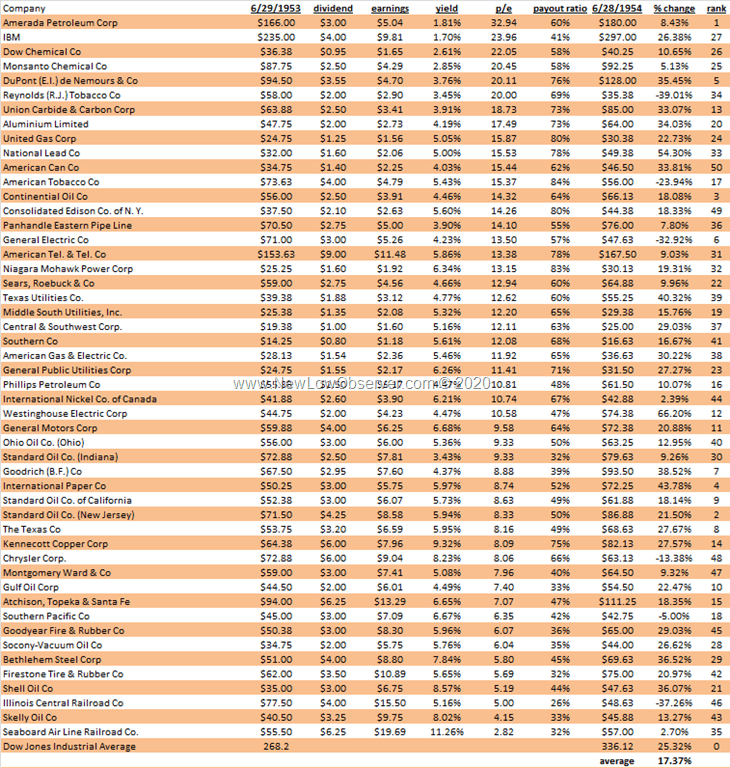
In the period from June 29, 1953 to June 28, 1954, the Dow Jones Industrial Average increased +25.32% compared to the overall change of +17.37% in the Nifty Fifty. The breakdown of the data based on dividend yield, price-to-earnings ratios, and dividend payout ratio.
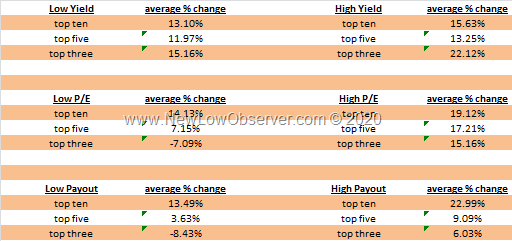
The best gain was achieved by the top three stocks in the High Payout category with an increase of +22.99%. On average, best performing group was the High P/E, however, no grouping managed to beat the performance of the Dow Jones Industrial Average.
Note:
See also:
Posted in Fabulous Fifty, Nifty Fifty
Below is the performance of the Nifty Fifty as published on September 10, 1951 by Barron’s covering data from July 2, 1951 to July 9, 1952:
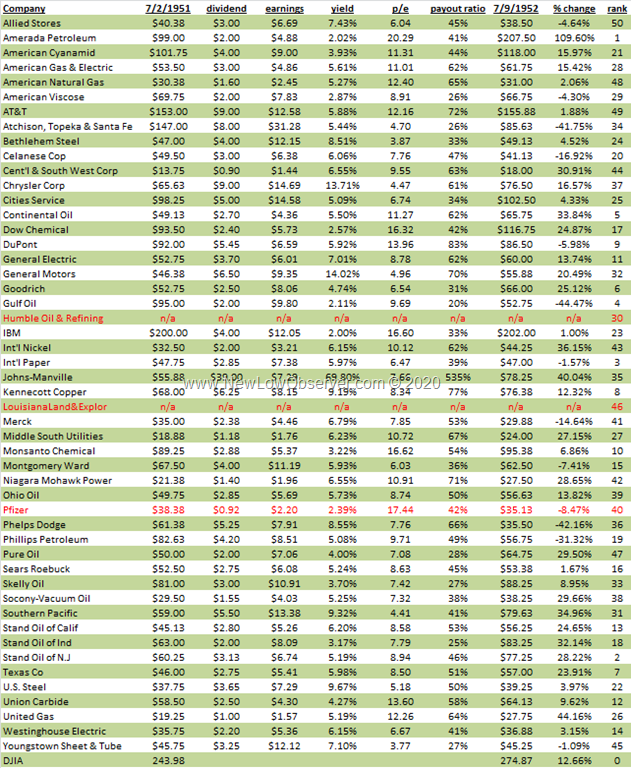
In the period from July 2, 1951 to July 9, 1951, the Dow Jones Industrial Average increased +12.66% compared to the overall change of +11.15% in the Nifty Fifty. The breakdown of the data based on dividend yield, price-to-earnings ratios, and dividend payout ratio.
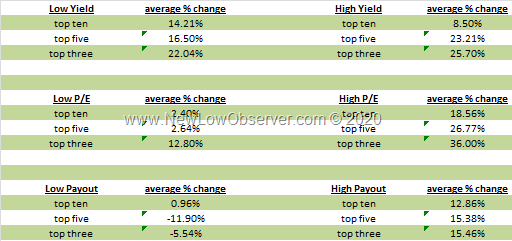
The best gain was achieved by the top three stocks in the High P/E category with an increase of +36.00%. The best performing group was the High P/E stocks where all of categories generated gains that beat the Dow Jones Industrial Average.
Note:
see also:
Posted in Fabulous Fifty, Nifty Fifty
Below is the performance of the Nifty Fifty as published by Forbes from the December 15, 1977 publish date to December 15, 1978:
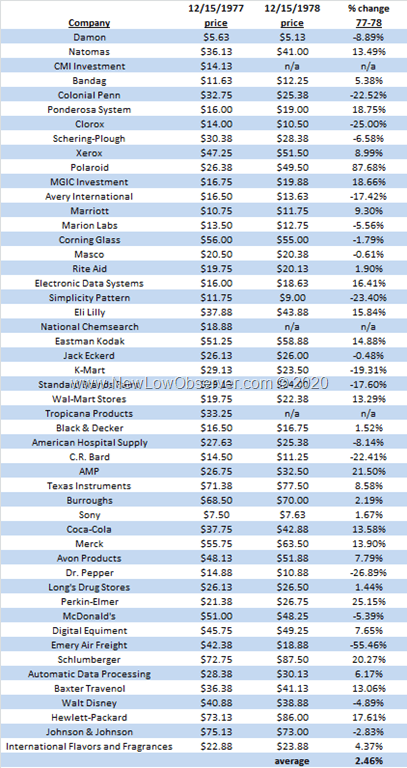
In the period from December 15, 1977 to December 15, 1978, the Dow Jones Industrial Average decline –1.54% compared to the overall change of +2.46% in the Nifty Fifty. The breakdown of the data based on dividend yield & price-to-earnings ratios.
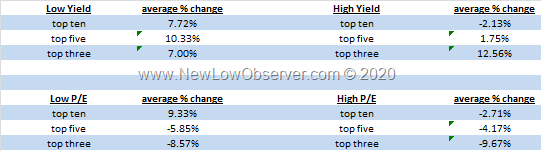
The best gain was achieved by the top three stocks in the High Yield category with an increase of +12.56%. However, the best performing group was the Low Yield stocks where all of categories generated positive returns.
See also:
Posted in Fabulous Fifty, Nifty Fifty