
see also:

Below is the annual 52-week low for Southern California Edison (SCE) from 1958 to 1967. We’ve also included the 3-month Treasury Bill as a comparison to show how utility stocks perform against the backdrop of rising interest rates.

In this example, the 3-month Treasury Bill increased from 1.77% to 4.31%. Meanwhile, Southern California Edison (SCE) had a 52-week low range from $15.87 to $31.75.
Posted in 1958-1968, Chart of the Day, interest rates, SCE
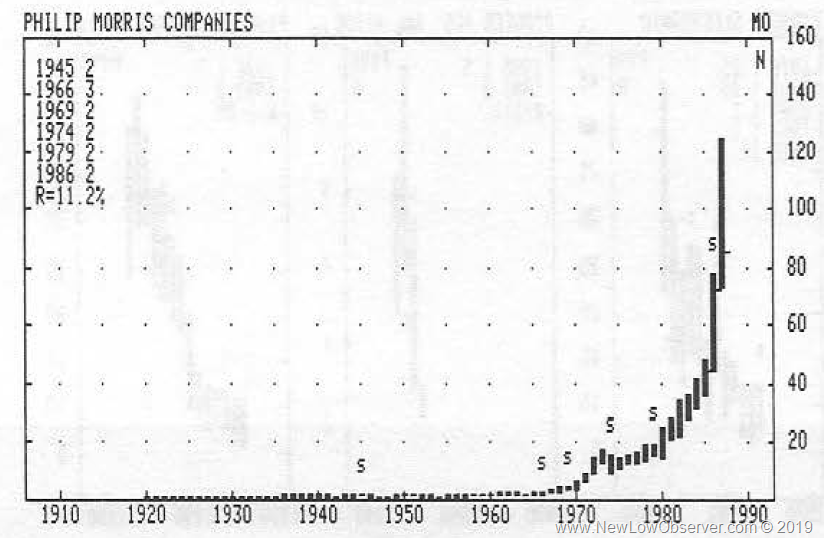
Below is a chart of Altria (Philip Morris) from 1920 to 1987.
See our 10-Year price targets for MO at the following link (here).
Posted in 1920, 1987, Altria, Chart of the Day, MO
Below is the annual 52-week low for New England Electric Systems (NES) from 1958 to 1967. We’ve also included the 3-month Treasury Bill as a comparison to show how utility stocks perform against the backdrop of rising interest rates.
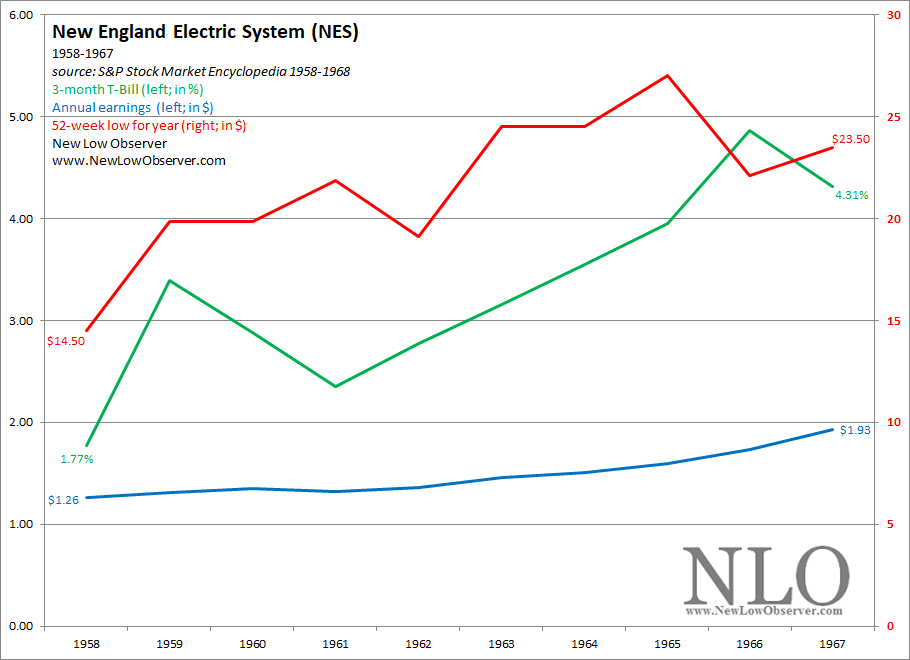
In this example, the 3-month Treasury Bill increased from 1.77% to 4.31%. Meanwhile, New England Electric Systems (NES) had a 52-week low range from $14.50 to $23.50.
Below is the annual 52-week low for Ohio Edison (OEC) from 1958 to 1967. We’ve also included the 3-month Treasury Bill as a comparison to show how utility stocks perform against the backdrop of rising interest rates.

In this example, the 3-month Treasury Bill increased from 1.77% to 4.31%. Meanwhile, Ohio Edison (OE) had a 52-week low range from $12.75 to $27.87.
Posted in 10-year Targets, 1958-1968, Chart of the Day, interest rates, Ohio Edison, OSE
Below is the annual 52-week low for Consolidated Edison (ED) from 1958 to 1968. We’ve also included the 3-month Treasury Bill as a comparison to show how utility stocks perform against the backdrop of rising interest rates.
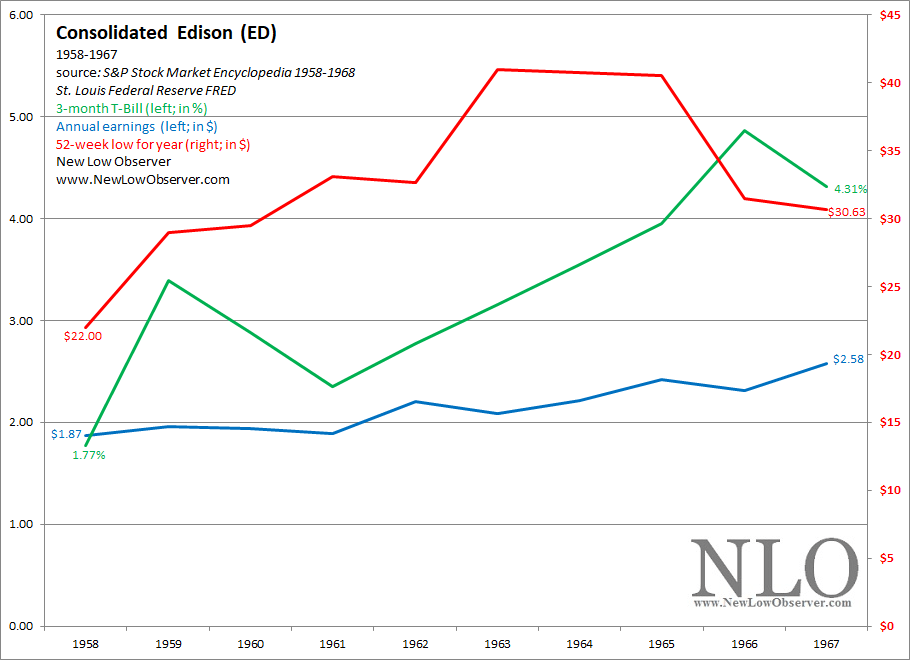
In this example, the 3-month Treasury Bill increased from 1.77% to 4.31%. Meanwhile, Consolidated Edison (ED) had a 52-week low range from $22.00 to $30.63.
Posted in 1958-1968, Chart of the Day, Consolidated Edison, ED, interest rates
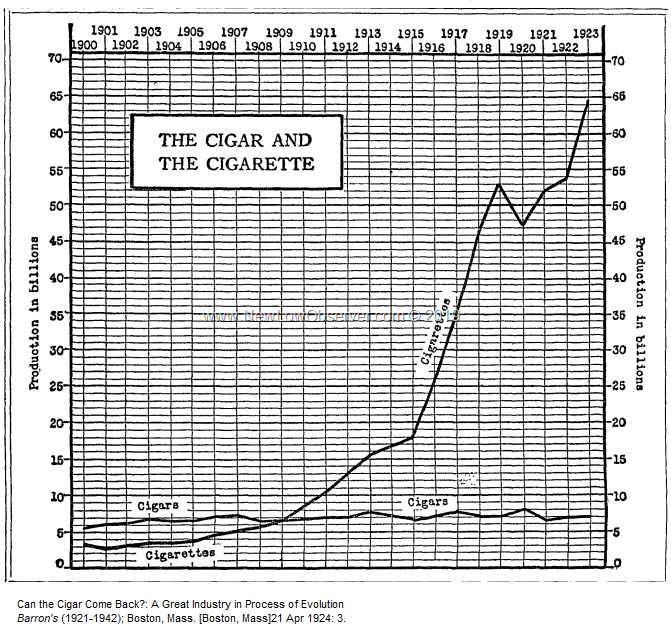
Below is a chart of the production of cigars and cigarettes from 1900-1923.
We have included the market share comparison of Juul, the e-cigarette that Altria (MO) recently increased their stake in, and other tobacco related products from 2014 to 2017 in a research report generated by Bonnie Herzog, senior analyst at Wells Fargo Securities.

Are cigarettes going the way of the cigar? Maybe. Will e-cigarettes replace cigarettes? Possibly.
As far as we’re concerned, all articles on the topic of cigarettes and e-cigs should mirror the 1924 Barron’s article title, “Can the Cigarette Come Back?: A Great Industry in Process of E-volution.”
Posted in 1900, 1923, Chart of the Day, cigarettes
Below is a chart of the price index of Southern England from 1290 to 1950. Highlighted in the chart is the formation of the Bank of England in 1694.

Additional reading: Interest Rate Policy: Bizarre to the Uninitiated
Posted in 1290, 1950, Chart of the Day, Federal Reserve Bank, inflation
Below is the average price-to-earnings ratio of twelve stocks from the 1921 low to December 1930.
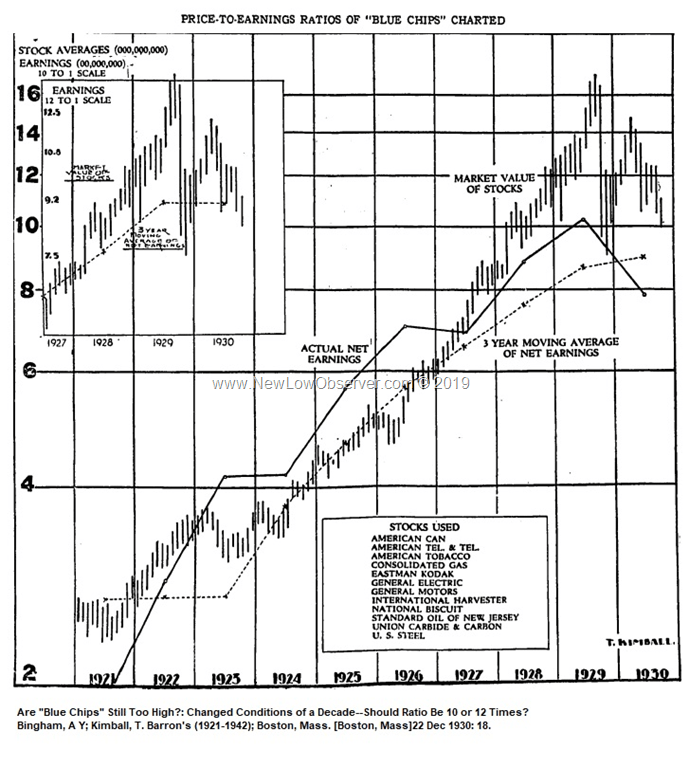
Worth noting is that the late 1929 low would have been considered undervalued to most investors.
Posted in Chart of the Day, High P/E, P/E ratio
Below is the annual 52-week low for Montana Power (MTP) from 1958 to 1968. We’ve also included the 3-month Treasury Bill as a comparison to show how utility stocks perform against the backdrop of rising interest rates.
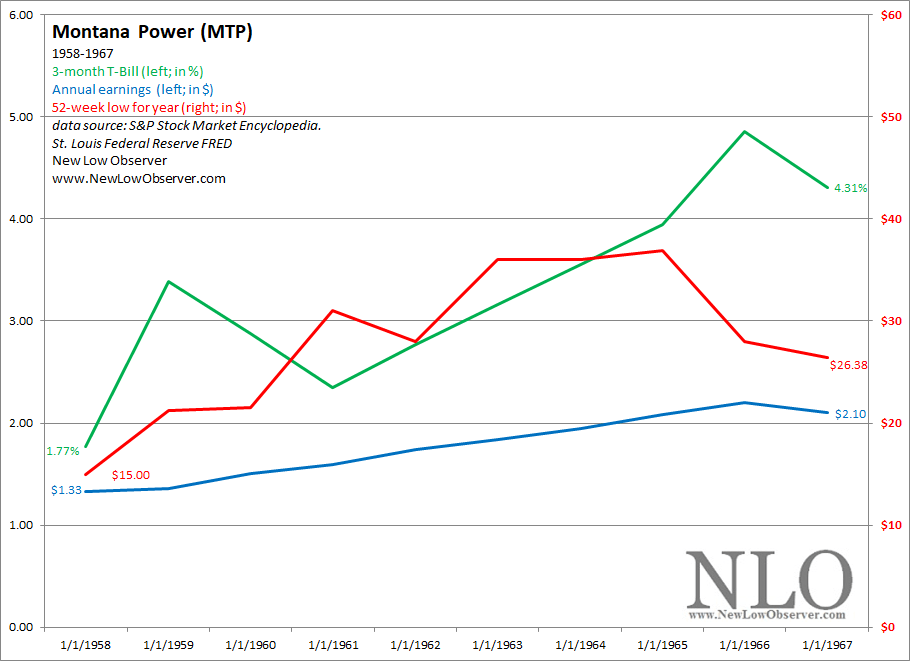
In this example, the 3-month Treasury Bill increased from 1.77% to 4.31%. Meanwhile, Montana Power (MTP) had a 52-week low range from $15.00 to $26.38.
Posted in 1958-1968, Chart of the Day, interest rates, Montana Power
Below is the annual 52-week low for Consolidated Edison (ED) from 1958 to 1967. We’ve also included the 3-month Treasury Bill as a comparison to show how utility stocks perform against the backdrop of rising interest rates.
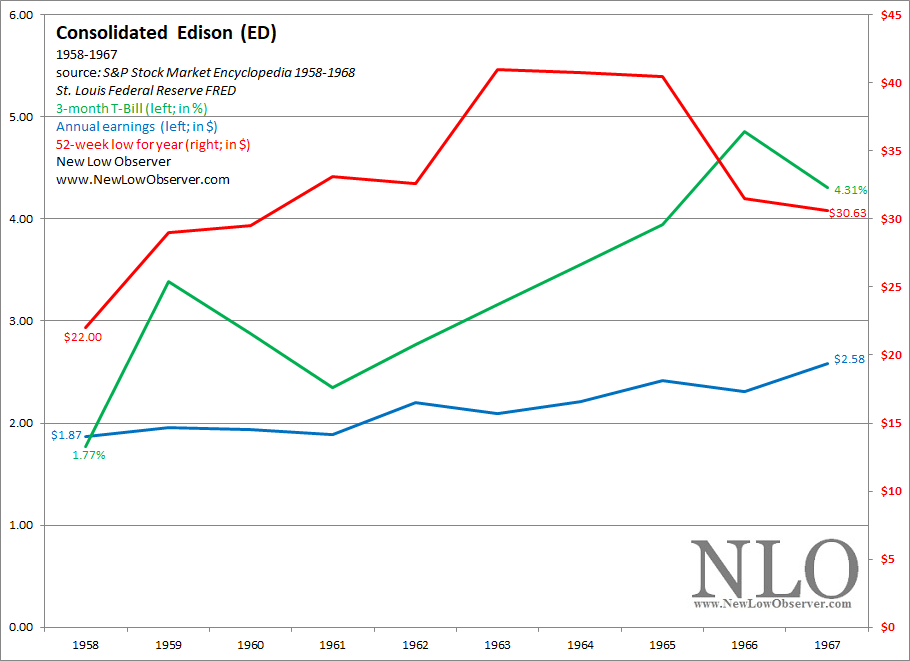
In this example, the 3-month Treasury Bill increased from 1.77% to 4.31%. Meanwhile, Consolidated Edison (ED) had a 52-week low range from $22.00 to $30.63.
Below is the annual 52-week low for Florida Power Corp. from 1958 to 1968. We’ve also included the Effective Fed Funds Rate as a comparison to show how utility stocks perform against the backdrop of rising interest rates.
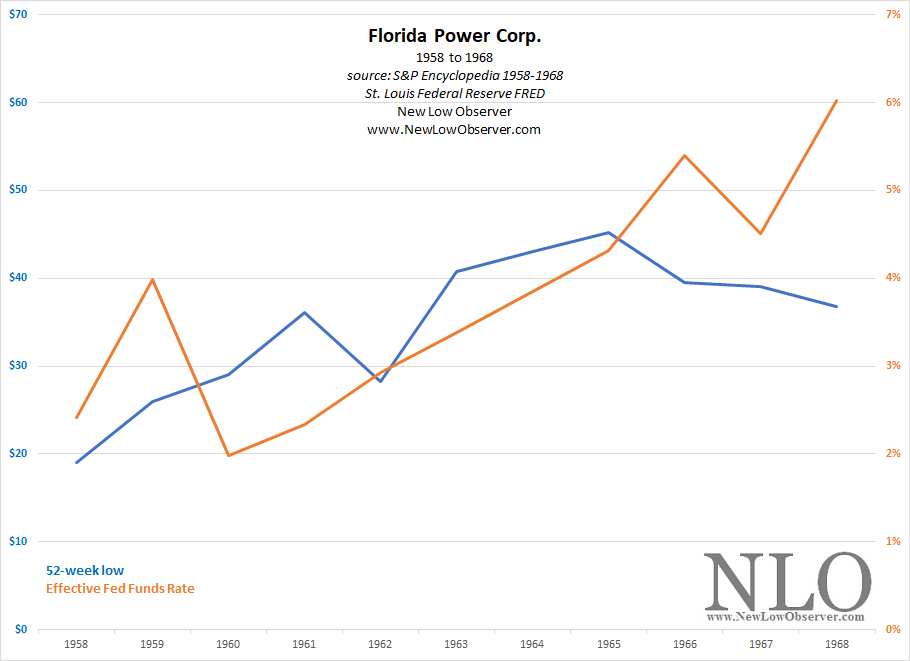
In this example, the Effective Fed Funds Rate increased from 2.42% to 6.02%. Meanwhile, Florida Power Corp. had a 52-week low range from $19 to $36.75.
Posted in 1958-1968, Chart of the Day, interest rates
Below is the annual 52-week low for Dome Mines (DM) from 1960 to 1968. We’ve also included the Effective Fed Funds Rate as a comparison to show how gold mining stocks perform against the backdrop of rising interest rates.
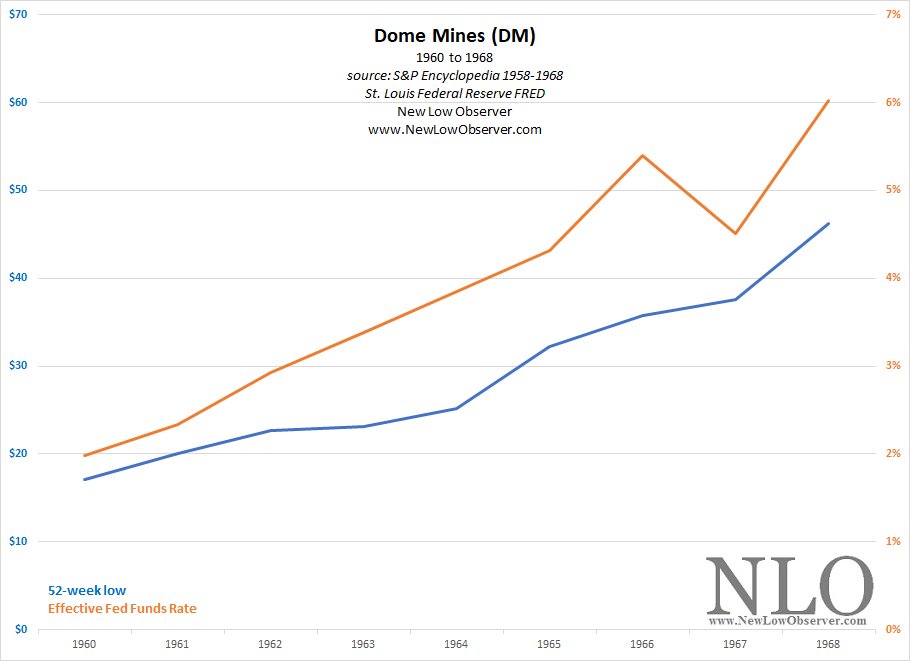
In this example, the Effective Fed Funds Rate increased from 1.98% to 6.02%. Meanwhile, Dome Mines (DM) had a 52-week low range from $17.12 to $46.25.
Posted in 1958-1968, Chart of the Day, Dome Mines, gold, interest rates
Below is the annual 52-week low for American Electric Power (AEP) from 1958 to 1968. We’ve also included the Effective Fed Funds Rate as a comparison to show how utility stocks perform against the backdrop of rising interest rates.
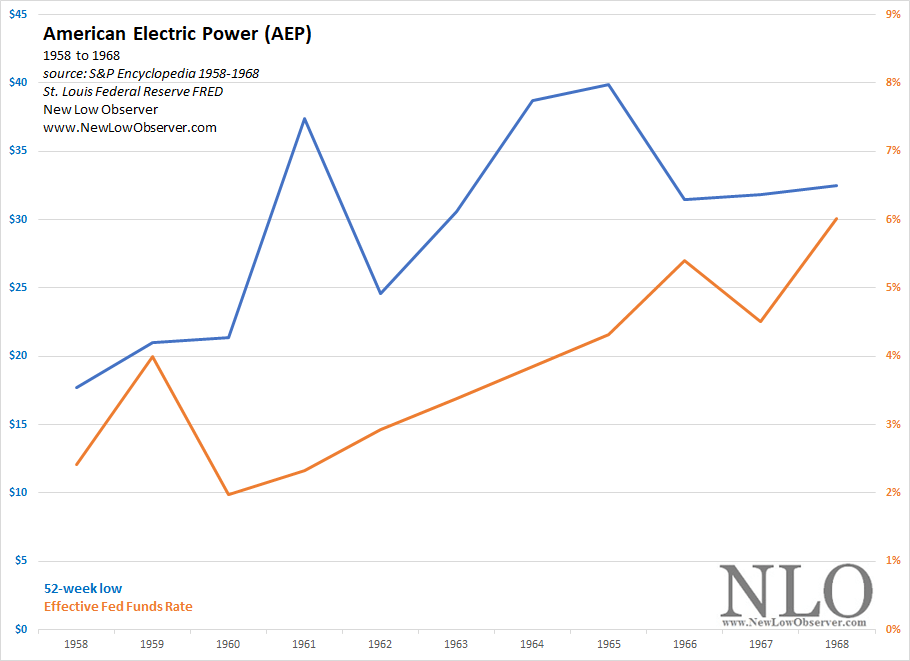
In this example, the Effective Fed Funds Rate increased from 2.42% to 6.02%. Meanwhile, American Electric Power (AEP) had a 52-week low range from $17.75 to $32.50.
Posted in 1958-1968, AEP, Chart of the Day, interest rates
Below is the annual 52-week low for Campbell Red Lake Mines (CRK) from 1960 to 1968. We’ve also included the Effective Fed Funds Rate as a comparison to show how gold mining stocks perform against the backdrop of rising interest rates.

In this example, the Effective Fed Funds Rate increased from 1.98% to 6.02%. Meanwhile, Campbell Red Lake Mines (CRK) had a 52-week low range from $9.63 to $24.00.